Is a Betta Fish Right for Me?
There’s a reason bettas are one of the most popular pet fish in the world. They’re beautiful, surprisingly full of personality, and they don’t need a massive setup to thrive. But they do need more than most pet stores let on.
This isn’t a sales pitch or a care guide. It’s an honest look at what keeping a betta actually involves, so you can decide whether it’s the right fit for your life right now.
Why People Love Bettas
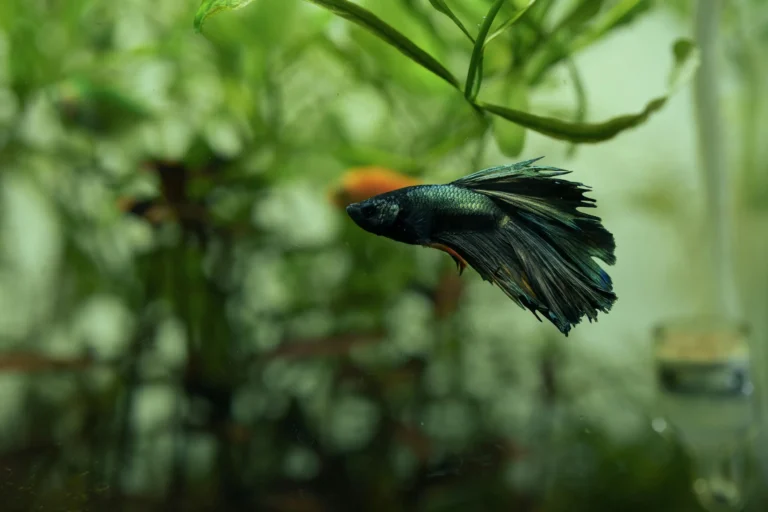
Bettas aren’t like most fish. They’re curious, active, and genuinely interactive. A healthy betta will learn to recognize you and swim to the front of the tank when you walk up, often wiggling back and forth like an excited little greeting.1 They can even learn simple tricks, like swimming through a hoop.2
They also have distinct personalities. Some are bold and flare at everything. Some are chill and spend their afternoons lounging on a leaf near the surface. You get to know your fish as an individual, which is something a lot of people don’t expect from fishkeeping.
On top of that, they’re hardy. Bettas are more forgiving of beginner mistakes than many other fish species, thanks to their ability to breathe air from the surface as well as through their gills.1, 5 That doesn’t mean they’re indestructible, but it does mean the learning curve is manageable.
What Bettas Actually Need
Here’s where the pet store version of betta care and reality start to diverge. Bettas are low-maintenance compared to a lot of pets, but “low-maintenance” isn’t the same as “no maintenance.”
A Real Tank
You’ve probably seen bettas displayed in tiny cups at the pet store. That’s for selling, not for living.
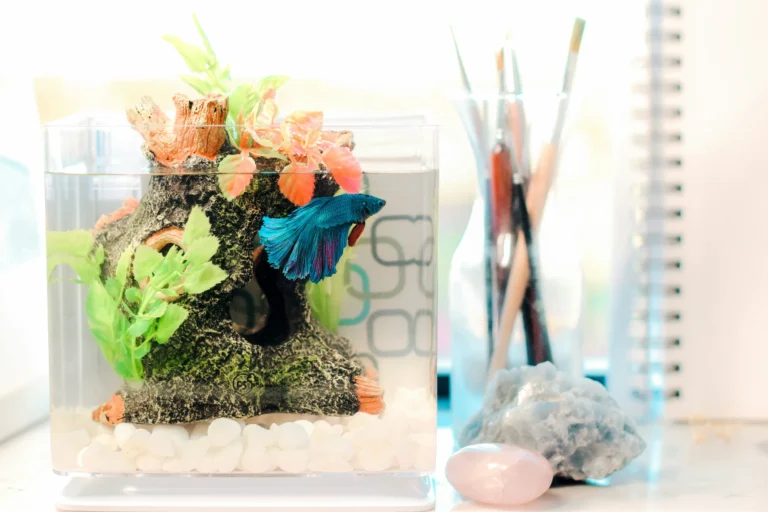
The widely accepted minimum among betta keepers is a 5-gallon tank. If you have the space, a 10-gallon is even better, as the larger volume allows for more stable water parameters and more stocking flexibility if you decide to add tank mates in the future.
Research shows that bettas in very small containers (under about 1.5 gallons) are significantly less active and show more stress-related behaviors, like repetitive pacing and motionless hovering.3 Give them room, and they actually swim, explore, and forage the way they’re supposed to.4
A 5-gallon tank isn’t huge. We’re talking roughly 16 to 18 inches long, about 10 inches wide, and around a foot tall. It fits comfortably on a desk or a dresser, though you’ll want to make sure the surface can handle the weight (5 gallons of water weighs about 42 pounds, plus the tank and equipment).
Read More: What Size Tank Do Bettas Need?
A Heater
Bettas are tropical fish. They need water between about 77°F and 82°F to stay healthy and active.1 Without a heater, your betta is at the mercy of your room temperature, and most homes don’t stay consistently warm enough.
Cold bettas get sluggish, stop eating, and become vulnerable to illness.6, 9 A small, adjustable aquarium heater and a cheap thermometer to double-check the temperature are all you need here.
A Filter (Strongly Recommended)
You can technically keep a betta without a filter, but a filter makes your life significantly easier.
Here’s the short version: fish produce waste, waste turns into ammonia, and ammonia is toxic. In a tank without a filter, you’ll need to do water changes every couple of days to keep things safe.1, 5 A simple sponge filter gives beneficial bacteria a place to grow, and those bacteria break down the ammonia for you, stretching your water changes to about once a week or every two weeks.1, 8
One thing to watch: bettas don’t like strong currents.1, 7 A gentle sponge filter is ideal. If you go with a hang-on-back or canister filter, you’ll want to baffle the output so it doesn’t push your fish around.
Regular Water Changes
Even with a filter, you’ll need to do partial water changes regularly. For a filtered tank, that typically means swapping out about 25% of the water once a week or every two weeks.8, 10
The process is simple: siphon out some old water, treat the new water with a dechlorinator, make sure it’s roughly the same temperature, and add it back in.8 It takes about 10 to 15 minutes once you’ve got the hang of it.
The Right Food
Bettas are carnivores. They need protein-rich food, not the generic tropical flakes from any jar on the shelf. A high-quality betta pellet is your everyday staple, and you can supplement with freeze-dried bloodworms or brine shrimp as an occasional treat.1, 6
Read More: What to Feed a Betta Fish: A Complete Guide to Betta Nutrition
Feed once or twice a day, only as much as your betta can eat in a few minutes.5, 6, 8 Overfeeding is one of the most common mistakes new betta keepers make, and it can cause serious health problems down the road.1
The Day-to-Day Commitment
Here’s what betta care actually looks like in practice:
Daily
- Feed your betta.
- Take a quick look at them to make sure they look healthy, are active, and are eating normally.
- Check the water temperature.
Weekly or biweekly
- Do a partial water change.
- Wipe down any algae on the glass if needed.
- Test your water parameters for ammonia.
Once a month
- Rinse filter media in old aquarium water.
- Trim live plants if you have them.
That’s genuinely it. Once your tank is set up and stable, bettas are one of the easier pets to care for on a daily basis.
Common Reasons People Hesitate
- “I’ve never kept fish before.” Bettas are one of the most beginner-friendly fish you can keep. They’re hardy, they’re tolerant of a range of water conditions, and their care requirements are straightforward. You’ll make small mistakes. Everyone does. Bettas are forgiving enough to give you room to learn.
- “I don’t have much space.” A 5-gallon tank takes up about the same footprint as a large shoebox. You don’t need a dedicated fish room or even a big piece of furniture. A sturdy desk, nightstand, or shelf works fine.
- “I travel a lot.” Adult bettas can safely go without food for several days.8 For a long weekend, your betta will be just fine. For longer trips, an automatic feeder or a trusted friend who won’t overfeed can cover you. You don’t need a pet sitter coming by daily.
- “Don’t they only live a couple of years?” With proper care, bettas typically live two to three years in a home aquarium,1, 11 though some do live longer. That’s a real commitment, but it’s also a manageable one. And those are genuinely rewarding years if you’re giving them good care.
When a Betta Might Not Be the Right Fit
It’s okay if now isn’t the right time, or if a betta isn’t the right pet for you. Here are some honest reasons to hold off:
- You want a truly zero-maintenance pet. Bettas are low-maintenance, but they’re not no-maintenance. They need feeding, water changes, and a heated, clean environment. If you’re not ready to commit to even a small weekly routine, that’s worth being honest about.
- You’re looking for a pet a very young child can care for independently. Bettas need consistent, gentle care. A child can absolutely be involved and learn a lot from fishkeeping, but an adult should be the one making sure the water stays clean and the fish stays healthy.
- You can’t keep the tank in a stable environment. If the tank would be in a spot with extreme temperature swings, direct sunlight, or constant vibration (like on top of a speaker or next to a washing machine), it’s going to be hard to keep conditions stable for the fish.
Ready to Get Started?
If you’ve read all of this and you’re thinking yeah, I can do that, then a betta might be a great fit for you. They’re one of the most rewarding pets you can keep, especially for the amount of space and time they require.
Your next step is setting up the tank before you bring a fish home. Having everything running and stable ahead of time is the single best thing you can do to give your betta a great start.
Read More: How to Cycle Your Betta Tank: A Beginner’s Guide to the Nitrogen Cycle