 Annie
Annie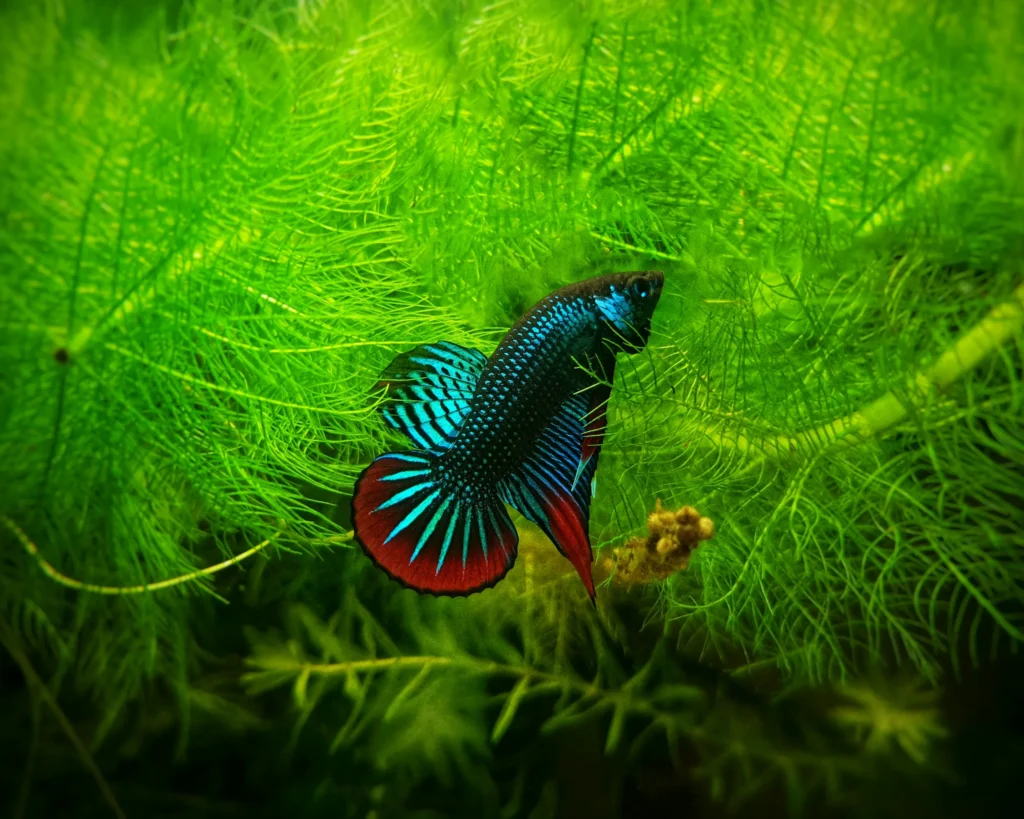
In the wild, bettas spend their days hunting mosquito larvae, water fleas, and tiny crustaceans in the shallow waters of Southeast Asia. They’re predators, not grazers. Your betta in its tank has the same digestive system and the same nutritional needs, just a much smaller pond.
That means generic tropical flakes full of grain and plant filler aren’t going to cut it. Bettas are carnivores, and they need food that matches. The good news is that feeding them well isn’t complicated once you know what to look for.
The Best Everyday Food for Your Betta
A high-quality betta pellet should be your fish’s daily staple.1 Pellets are convenient, easy to portion, and the good ones are formulated specifically for a carnivore’s nutritional needs.
What To Look for on the Label
Animal Protein as the First Ingredient
Fish meal, shrimp meal, krill, or insect meal are what you want to see at the top of the list.6 Ingredients like wheat, rice, or soy are common in pellets, but they should not dominate the formula in a fish that is built for an animal-protein-heavy diet.
Color-Enhancing Ingredients
Bettas can’t produce their own red, yellow, and orange pigments. They get them entirely from their food.7 These aren’t just cosmetic. The same carotenoid pigments that make your betta look vibrant also support a strong immune system.2 Look for ingredients like astaxanthin, beta-carotene, xanthophyll, canthaxanthin, spirulina, paprika, or krill.1
Healthy Fats
Bettas need certain healthy fats in their diet to support normal growth and keep their cells functioning properly.3 In the wild, they get these fats from small prey like ants, mites, mosquito larvae, flies, water fleas, amphipods, and isopods.
Choose a high-quality dry food with strong animal-based ingredients and a solid protein-and-fat profile, rather than relying on marketing alone. Ingredients like fish meal, shrimp meal, krill meal, and fish oil can be good signs that a formula is better aligned with a betta’s nutritional needs. Occasional protein-rich treats like bloodworms, brine shrimp or krill can add variety.3
Stabilized Vitamin C
Sometimes listed as L-ascorbyl-2-polyphosphate. It supports tissue growth, disease resistance, and keeps the food itself from breaking down too quickly.3
What’s Healthiest Food for Your Betta Fish? Here’s Our Recommendations
Based on all the requirements we covered above, I’ve narrowed down a selection of commercial fish foods that meet all your betta’s nutritional needs. These should be available via Amazon, Chewy, or at mainstream pet retailers in the U.S.A.
Every product here was chosen through my own independent research, and no brand has paid to appear on this page or to be endorsed. To help cover the costs of this site, this page does contain Amazon affiliate links. If you buy through one, we may earn a small commission at no extra cost to you.
Fluval Bug Bites Betta Micro Granules
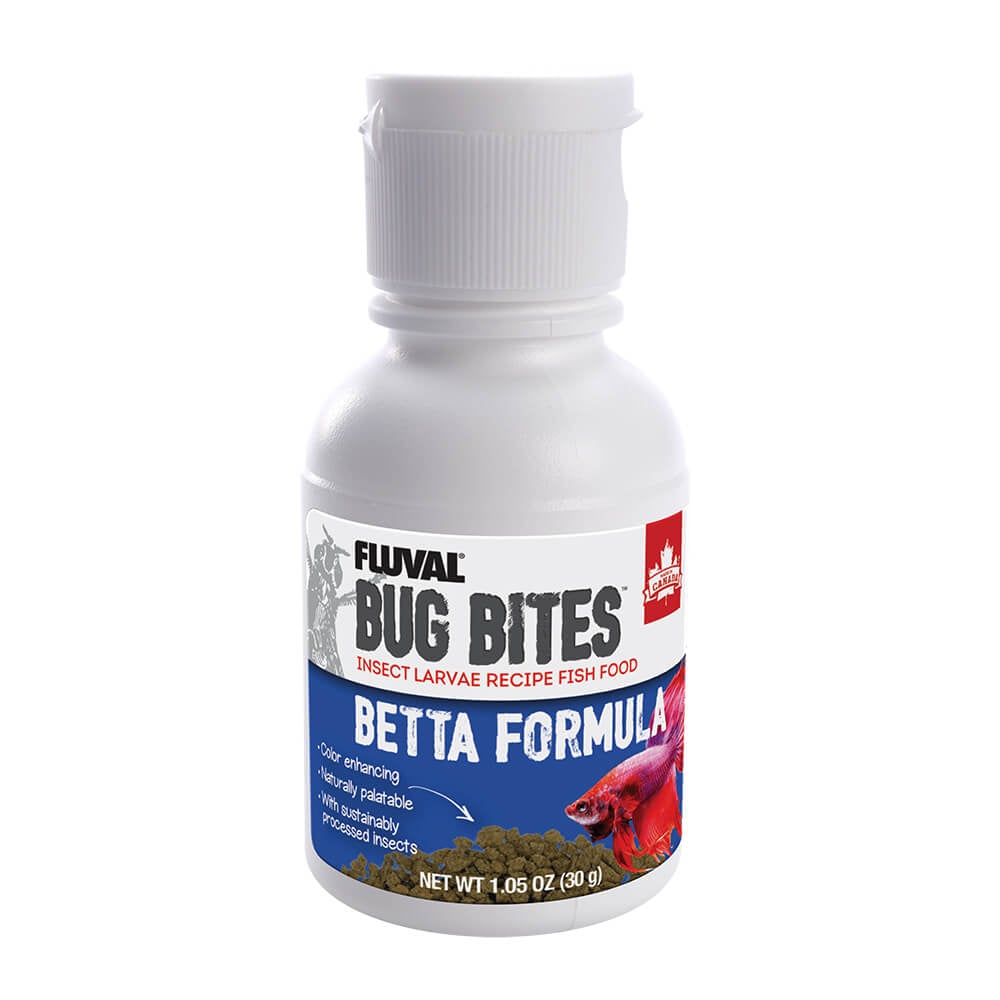
NorthFin Betta Bits
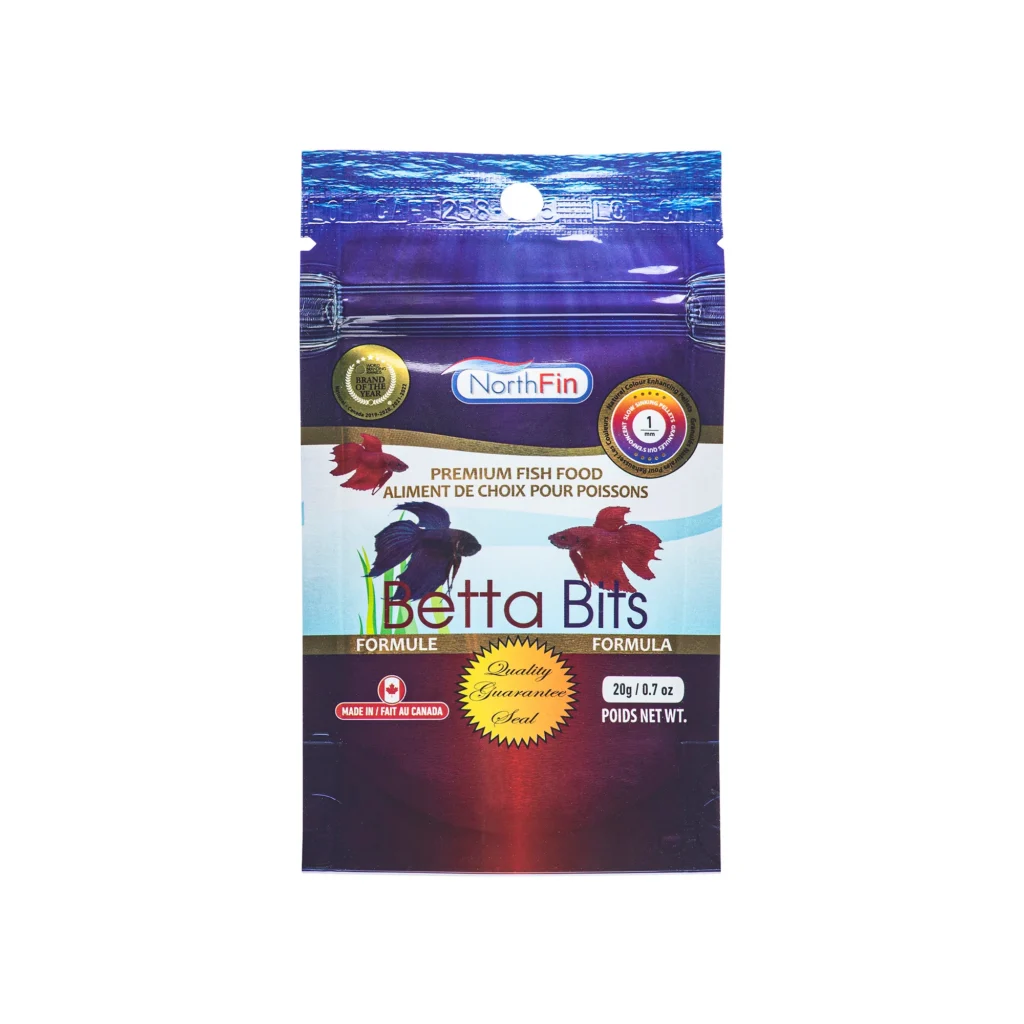
- 45% protein with whole Antarctic krill meal, herring meal, and sardine meal as the first three ingredients
- Strong fat profile on paper, with 16% crude fat and a clearly marine-based ingredient deck
- Strong color-support ingredients, including spirulina and astaxanthin
- Includes L-ascorbyl-2-polyphosphate, a stabilized vitamin C source
- Available at Amazon and Chewy
Fluval Bug Bites Betta Flakes
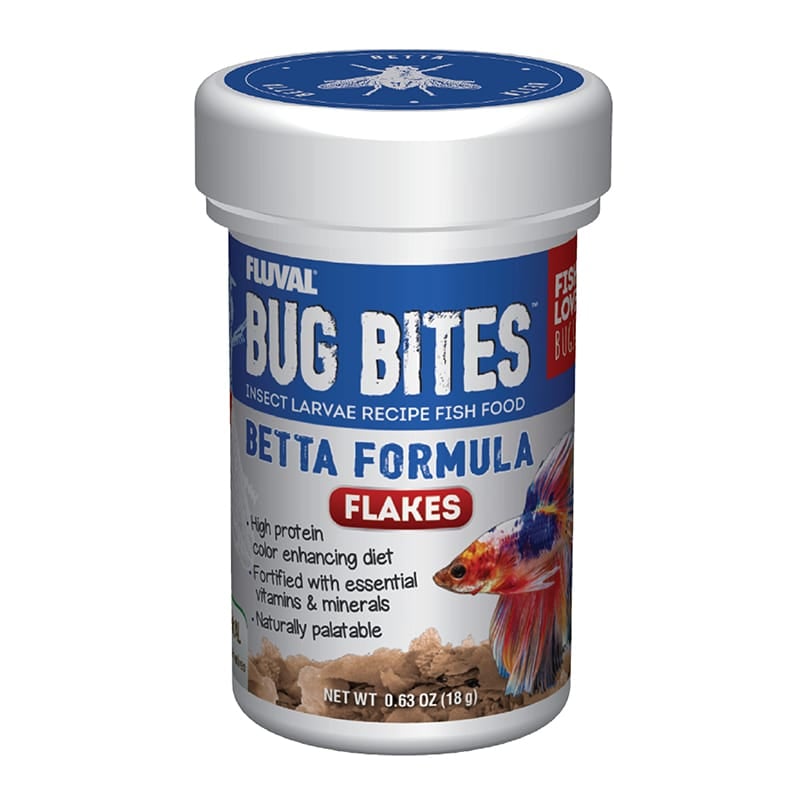
- Protein-rich flake formula with black soldier fly larvae and herring meal up front
- 46% protein with krill meal, shrimp meal, and salmon oil for added marine fats
- Strong color-support profile with krill, xanthophyll-rich marigold extract, and Haematococcus algae meal
- Includes stabilized vitamin C for nutritional support
- Available at Petco, Amazon and Chewy
New Life Spectrum Betta
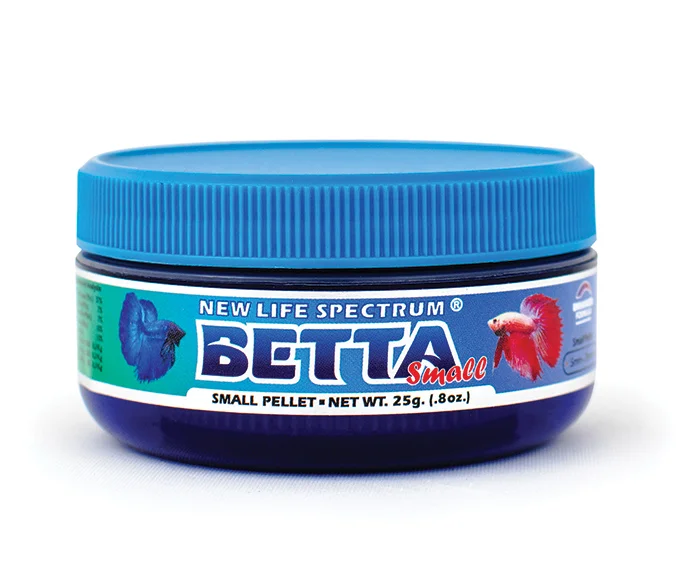
- A marine-heavy formula with krill and squid as the first two ingredients and 37% protein
- Strong color-support profile with astaxanthin, spirulina, and marigold
- Includes L-ascorbyl-2-polyphosphate, a stabilized vitamin C source
- Stronger ingredient base than many mainstream betta foods
- Available at Petco and Amazon
Betta Treats and Snacks: What to Give and How Often
Pellets should make up the foundation of your betta’s diet, but variety still matters. Adding other foods can help fill nutritional gaps and keep mealtime more interesting.1
Live foods like bloodworms, daphnia, and brine shrimp provide excellent nutrition and also encourage your betta’s natural hunting behavior, which can be enriching.2 The downside is that live foods can also introduce parasites or disease into your tank. If you choose to feed them, it’s safest to buy from controlled cultures rather than using wild-caught prey.
| Treat | What it is | How often |
|---|---|---|
| Frozen bloodworms | Midge larvae (Chironomusspp.), the classic³ | Once or twice a week |
| Frozen or live brine shrimp | A small saltwater crustacean⁶ | Once or twice a week |
| Daphnia | Freshwater water flea | Once or twice a week |
| Tubifex worms | Sludge worm, sold live or freeze-dried⁶ | Occasionally |
| Freeze-dried versions | Same organisms, dried | Any time, as a stand-in |
For most keepers, frozen and freeze-dried whole foods are the most practical choice. A few easy-to-find options include:
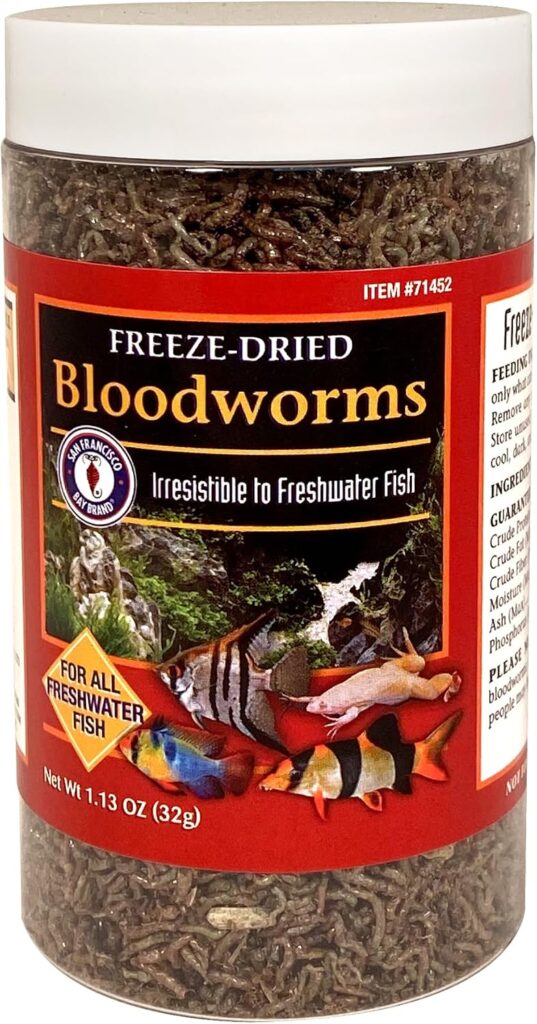
San Francisco Bay Brand Freeze-Dried Bloodworms
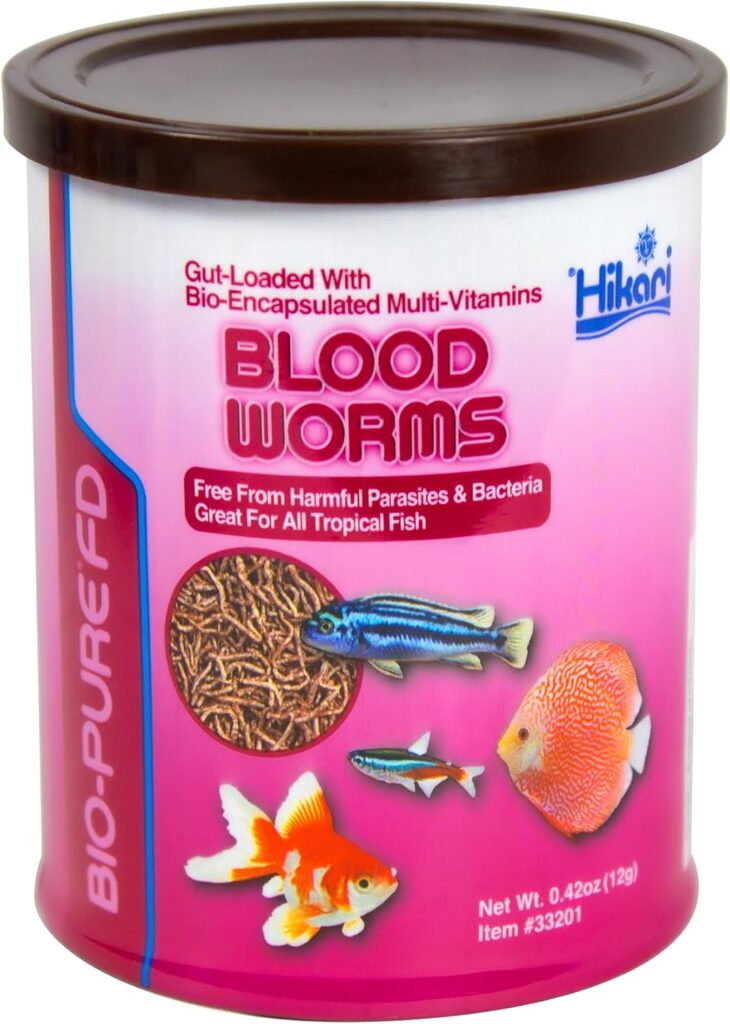
Hikari Bio-Pure Freeze-Dried Bloodworms
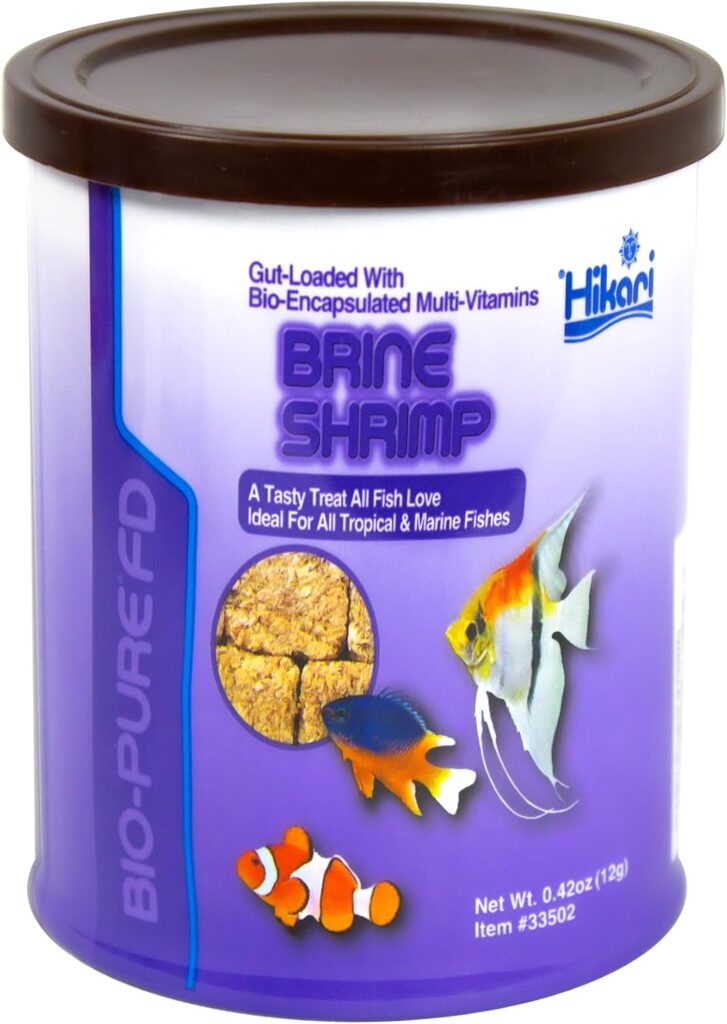
Hikari Bio-Pure Freeze-Dried Brine Shrimp
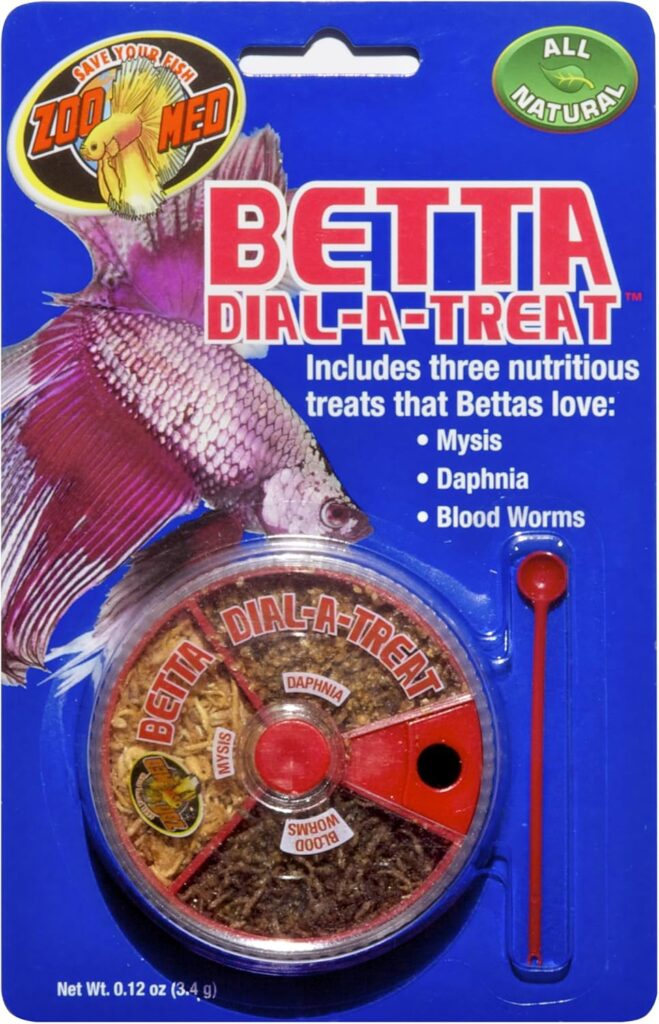
Zoo Med Betta Dial-A-Treat
What Not to Feed Your Betta Fish
- Generic tropical flakes. Most are formulated for omnivorous community fish and are loaded with plant-based fillers and carbohydrates that bettas can’t efficiently metabolize.3 Over time, this can lead to fat accumulation and health issues.
- Any fish food where grain or plant material is the first ingredient. Check the label. Some wheat is normal in pellet foods as a binding ingredient, but it shouldn’t be the first ingredient or crowd out the animal-based protein sources bettas need. If wheat flour, rice, or soybean meal tops the list, it’s not the right food for a carnivore.2
Can Betta Fish Eat Human Food?
A few plain, unseasoned options are fine in tiny amounts, like a small piece of boiled egg or plain cooked shrimp. But most human food isn’t safe: no bread, no crackers, nothing salted, seasoned, or high in carbs. When in doubt, skip it and stick to a quality pellet.
How Often Should You Feed a Betta?
Most keepers feed adult bettas once or twice a day. Offer only a small portion at a time, and reduce it if any food is left uneaten after a few minutes.2 If food is still floating at the surface or sinking to the bottom, you are feeding too much. Remove any leftovers so they do not rot and pollute the water, then offer a little less at the next feeding. Because every fish is different and pellet sizes vary, it is important to watch your betta and adjust as needed.
Skipping a day is usually fine. Some keepers fast their betta once a week to give its digestive system a break. Adult bettas can also go several days without food, so an occasional missed feeding is generally not a cause for concern.4
How Do You Know If a Betta Is Hungry?
A hungry betta comes to the front of the tank. They learn quickly that a person nearby means food, and a healthy one will swim up to the glass and dart back and forth as you approach.1 But here’s the thing: A betta will beg whether or not it needs feeding, so it’s best to just stick to a regular feeding schedule.
Now, a betta that stops meeting you at the glass, or takes food and spits it out, or ignores it altogether? It’s telling you something. Eating readily is one of the standard markers of a healthy betta, so a lost appetite means something’s up. Test the water first, then look the fish over for clamped fins, spots, or labored breathing.
Overfeeding: The Most Common Feeding Mistake for New Betta Owners
TLDR: You’re likely overfeeding your betta if food reaches the bottom uneaten, the belly stays rounded between meals, or you’re seeing more waste and cloudier water than usual.
It’s natural to want to feed your fish generously. They always seem hungry, and watching them eat is fun. But chronic overfeeding can lead to obesity, poor water quality, and other health problems, so portion control matters.
Uneaten food and excess fish waste break down into ammonia, which is toxic.8 In a small betta tank, overfeeding can cause ammonia to spike quickly, overwhelming your filter. Poor water quality puts additional stress on a betta’s immune system and can make it harder for your fish to stay healthy.
Remember: no more than two small feeds a day, and no more than your betta can eat in a couple of minutes.
How Long Can a Betta Fish Go Without Food?
Going on a weekend trip? Your betta will be fine.
Like most adult aquarium fish, adult bettas can safely go without food for several days.4 For a long weekend, you don’t need to do anything special. For short trips, it’s actually safer to leave your betta unfed than to risk an inexperienced friend overfeed them.
If you’ll be gone longer than a week or so, an automatic feeder set to dispense small amounts is an option, but test it before you leave to make sure it’s portioning correctly.
Signs Your Betta’s Diet Needs Adjusting
Your betta will tell you if something’s off. Here’s what to watch for:
- Fading color. If your betta is looking duller than usual, their diet might be missing the carotenoids they need. Switching to a higher-quality pellet or adding color-enhancing treats like bloodworms or daphnia can help.
- Bloating or a swollen belly. This often means overfeeding or constipation. Try fasting your betta for 24 to 48 hours, then offering a small amount of daphnia.9 If bloating is severe and the scales are raised (giving a pinecone appearance), that’s a sign of dropsy, which is a much more serious condition.1
- Buoyancy problems. If your betta is stuck floating at the surface or sinking to the bottom and can’t swim normally, overfeeding or swim bladder issues from a poor diet may be the cause.1
- Lethargy or refusing food. A healthy betta is an enthusiastic eater. If yours is ignoring food or seems sluggish, something’s off. Diet is one possibility, but water quality and temperature should be checked too.3
- Pale, stringy feces. Healthy betta droppings are dark and discrete. White, stringy, or trailing feces can be a sign of digestive problems.4