
 Annie
Annie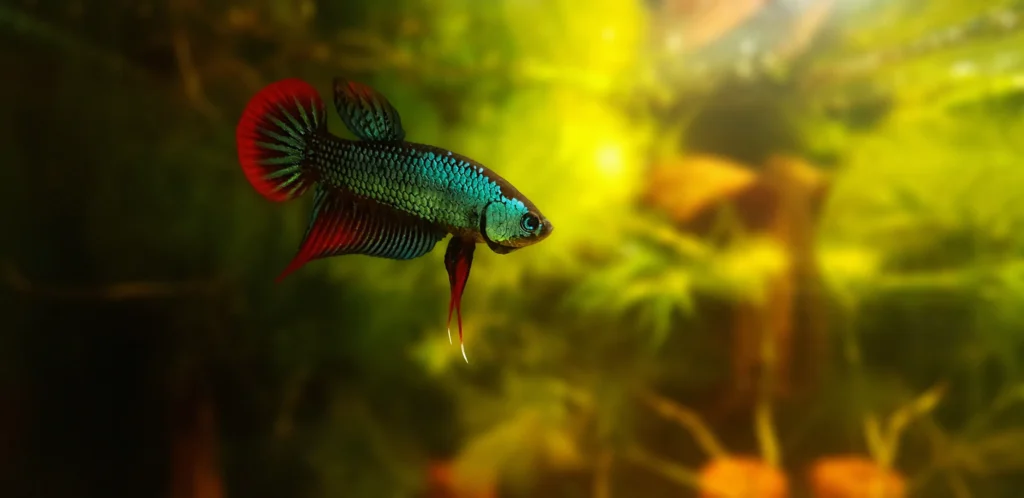
Bettas are rewarding fish, but they’re not always the easiest choice for people who want a peaceful community setup. They’re territorial fish with a long history of selective breeding for aggression, so caution is always warranted when people start talking about tank mates. At the same time, the answer isn’t as simple as “bettas can never live with other fish.”
The real answer is that it depends on your betta. No compatible-species list is guaranteed to hold true for every individual, because betta temperament varies so much from fish to fish. Some are calm enough to live with the right companions. Others will chase, harass, or kill anything else in the tank.
Species choice, tank size, planting, and tank layout all matter, but the personality of the fish in front of you matters most. This guide explains which tank mates tend to be the safest bets, which ones to avoid, and how to judge compatibility based on your own betta rather than a generic list.
Quick Answer: What Fish Can Live With a Betta?
- The fish that live with bettas best are peaceful, non-nippy species that don’t look like a rival betta or compete for its space. Corydoras catfish, harlequin rasboras, ember tetras, kuhli loaches, otocinclus, and snails are the safest bets.
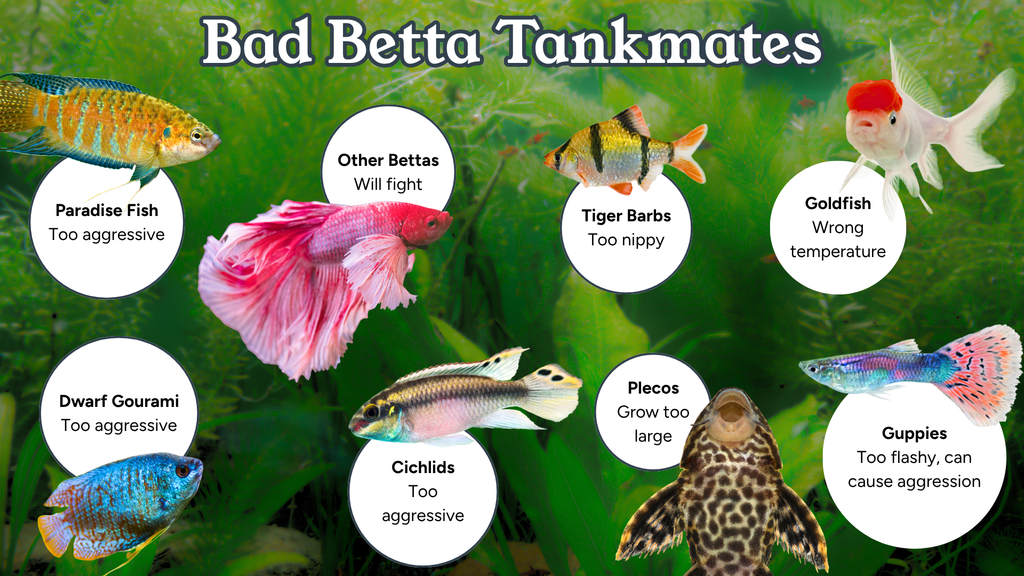
- Avoid other male bettas, or fin nippers like tiger barbs, flashy fish like guppies, paradise fish, dwarf gouramis, and plecos.
- Whether it actually works still comes down to your individual betta, tank size, and setup.
- A planted, filtered tank of at least 10 gallons, with visual barriers and a backup separation plan, gives a community the best chance.
What Makes a Good Betta Tank Mate?
Before getting to the species list, it’s worth understanding the filter. Once you know what you’re looking for, you can evaluate any fish, not just the ones that happen to appear on someone’s list.
- Temperament. You want peaceful fish that won’t pick fights and won’t trigger your betta’s aggression. This cuts in both directions: your betta may go after fish that look like a threat, and nippy fish will absolutely go after your betta’s fins.
- Appearance. Keeper experience consistently points to bettas reacting more aggressively to fish that look like rivals. Bright colors, long flowing fins, and a similar body shape are the main triggers. Fish that look nothing like a betta tend to fly under the radar.
- Swim zone. Bettas typically cruise the middle of the water column. Fish that stick to the bottom or the upper surface naturally reduce overlap and direct competition for space.
- Water parameters. Your tank mates need the same conditions your betta does: tropical temperatures in the 76°F to 82°F range, soft to moderately hard water, and stable parameters. A fish that requires very different conditions is a poor match regardless of how peaceful it is.
- Your specific betta. This one matters more than people expect. Individual temperaments vary a lot. Some fish are aggressive, some are skittish, and some are surprisingly laid-back about sharing their space. Long-finned varieties like halfmoons are more likely to have their fins chewed by tank mates than short-finned varieties like plakats. Some bettas take to a community tank without drama. Others go after anything that moves.
Best Betta Fish Tank Mates
No betta tank mate is a guaranteed success, because compatibility always depends on the individual fish. But some species are consistently better bets than others. In general, the safest options are peaceful, non-nippy fish that don’t look like rival bettas and don’t compete for the same part of the tank.
The species below tend to work well for the same reasons: they are calm, they keep to themselves, and they are less likely to trigger territorial behavior. That does not mean they will work with every betta. It means they are among the most reasonable options to try if your fish seems suited to a community setup.
Because there is very little formal research on betta compatibility by species, this section draws mostly on species profiles, known behavior, and long-running keeper experience rather than controlled studies. These are informed recommendations, not promises. Your betta still gets the final say.
Corydoras catfish
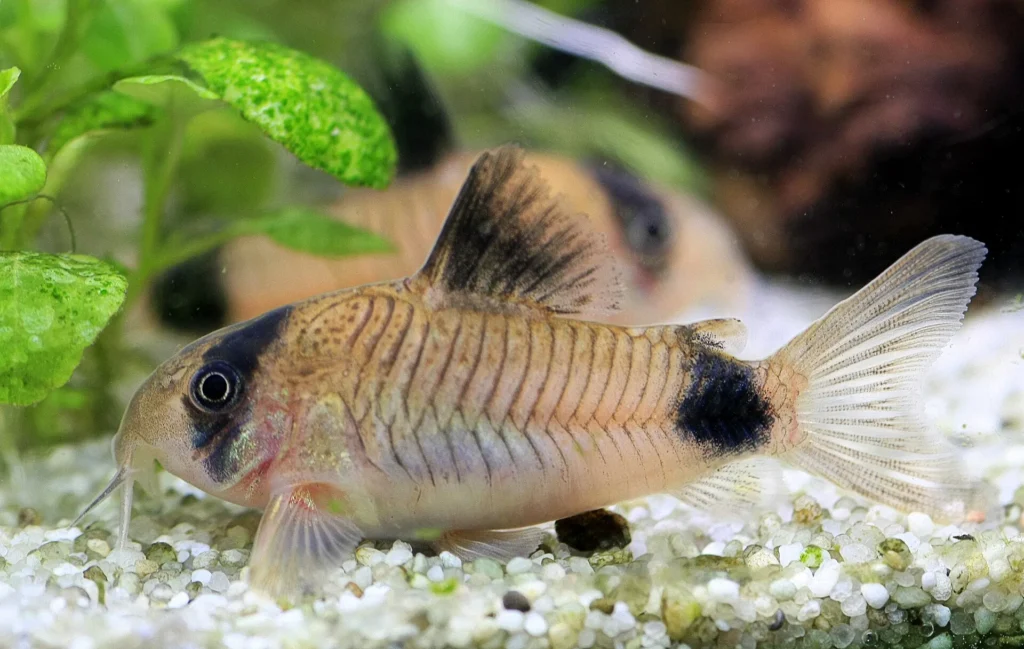
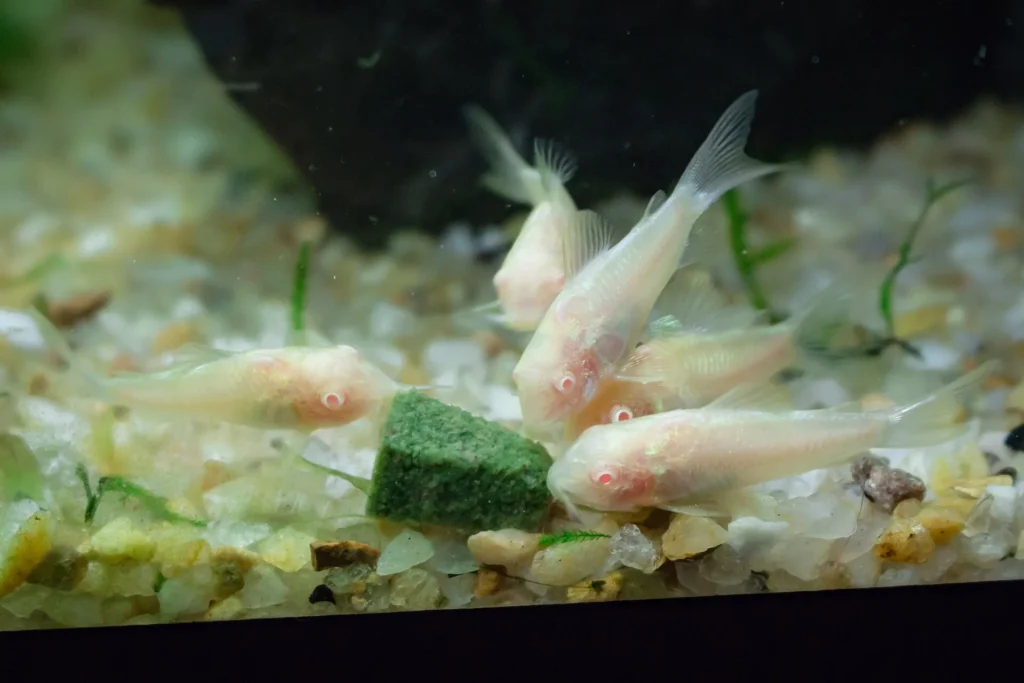
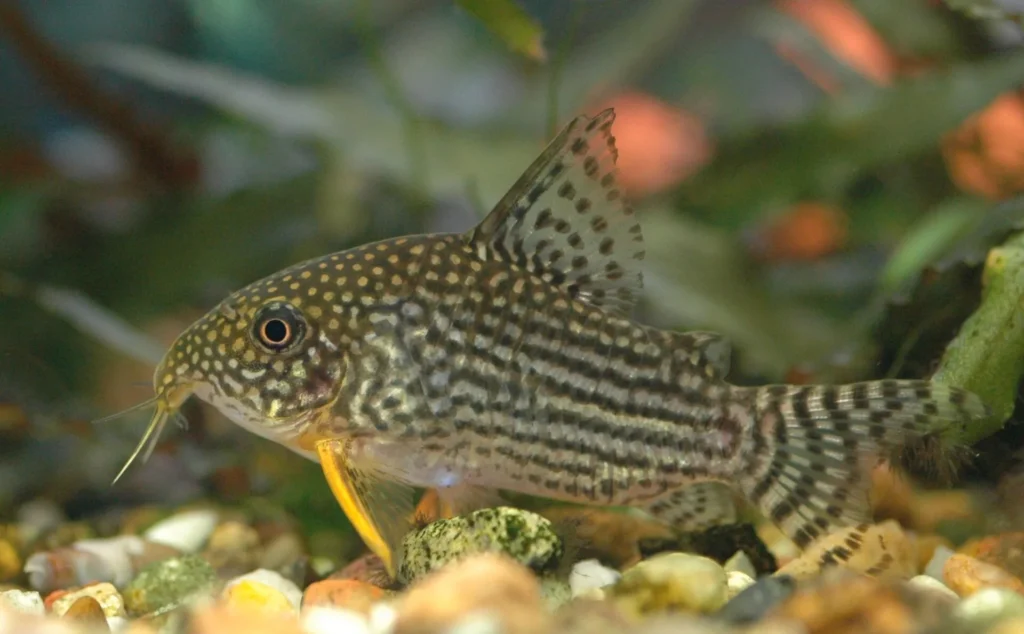
Corydoras are armored, peaceful bottom-dwellers that occupy a completely different swim zone from your betta. Their body shape reads nothing like a rival betta, they’re not nippy, and they genuinely mind their own business. They do best in groups of six or more and prefer a sandy substrate, so plan your tank accordingly. Popular varieties include the bronze cory (Corydoras aeneus), panda cory (Corydoras panda) and Sterba’s Cory (Corydoras sterbai)
Harlequin rasboras
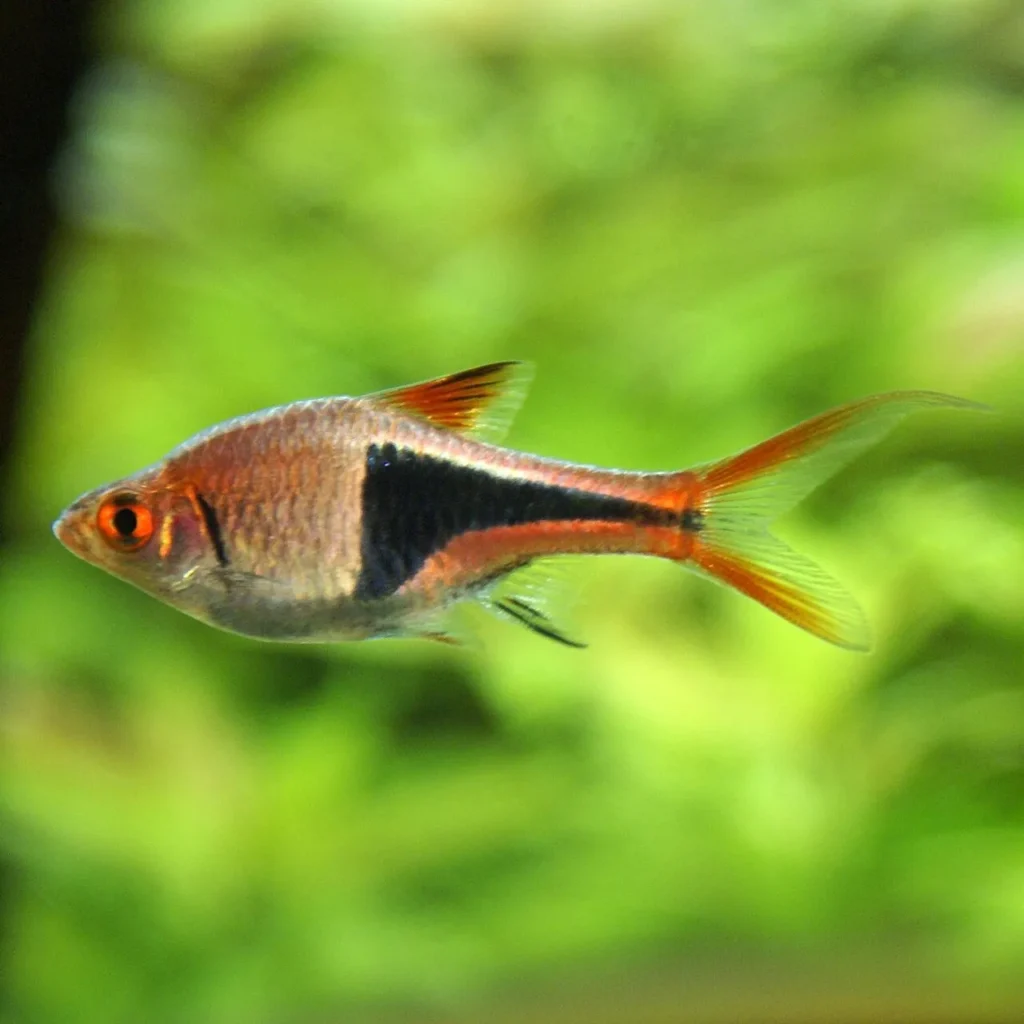
Harlequin rasboras (Trigonostigma heteromorpha) are one of the most popular choices among betta keepers, and for good reason. They’re fast-moving, not brightly colored in a way that typically provokes betta aggression, and their speed helps them get out of the way if your betta does take notice. This is keeper consensus rather than research, but it’s very consistent keeper consensus.
Ember tetras
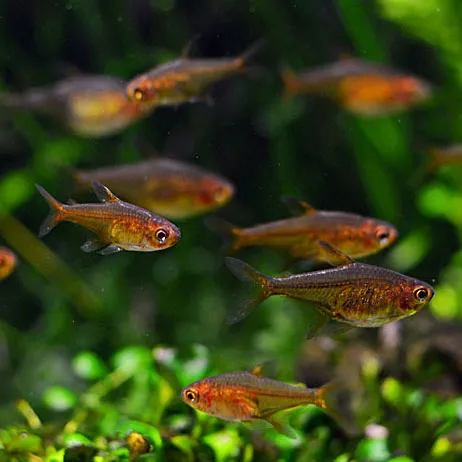
Small, calm, and not particularly flashy, ember tetras are a gentler choice than many of the more active or brightly colored tetra species. They work well in a planted tank and don’t have the nippy reputation that rules out some of their relatives. That said, not all tetras are good fits for bettas, so don’t assume one species’ reputation applies to another.
Kuhli loaches
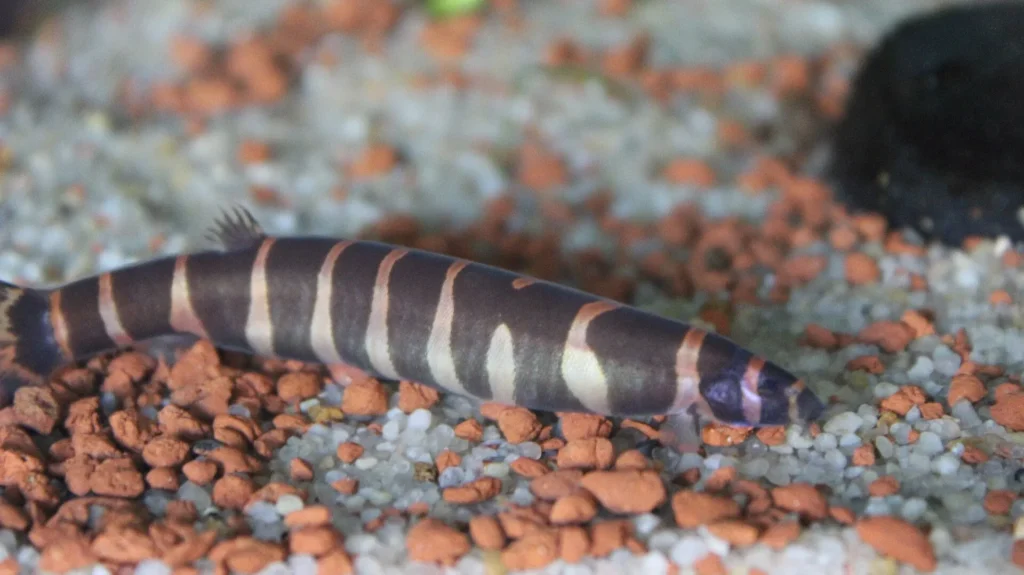
Kuhli loaches are shy and happiest when they’re hiding. They’re largely nocturnal and tend to stay well out of your betta’s territory during the day, which makes them a low-drama addition to a peaceful setup. They’re social with their own kind, so aim for a group of three or more.
Otocinclus catfish
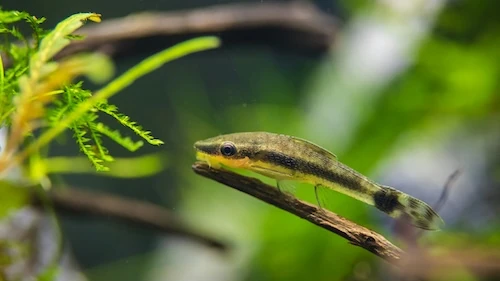
If you’ve got algae and want something to help manage it, otocinclus are a great fit for a betta community tank. They’re tiny, fast, and spend their time grazing on surfaces and plants rather than competing for swim space with your betta. The one catch: they need an established tank with a natural algae supply to thrive, so they’re not the right addition for a new setup.
Betta Tank Mate Checklist
Before adding any tank mate, ask:
- Is it peaceful and unlikely to fight back?
- Is it non-nippy?
- Does it avoid long flowing fins and bright rival-like coloration?
- Does it occupy a different swim zone than the betta?
- Does it tolerate the same water parameters?
- Do I have a large enough, planted, filtered tank?
- Do I have a backup plan if compatibility fails?
If the answer to any of these is no, it is probably not a good betta tank mate.
Can Bettas Live With Shrimp or Snails?
Sometimes, but the risk level is very different for shrimp and snails. Many bettas will hunt shrimp because shrimp are small, quick-moving invertebrates that can register as food. Snails are usually a safer betta tank mate because their shells offer real protection, though some bettas may still peck at antennae or harass them. Success depends on your individual betta, the species you choose, and how much cover the tank provides.
Ghost shrimp are sometimes suggested as a lower-stakes experiment because they’re inexpensive and can be fast enough to avoid a betta’s attention. Be aware that “ghost shrimp” is sold under multiple species, and some varieties have large grasping front claws that can injure your betta. If the shrimp has prominent grabby arms, pass on it.
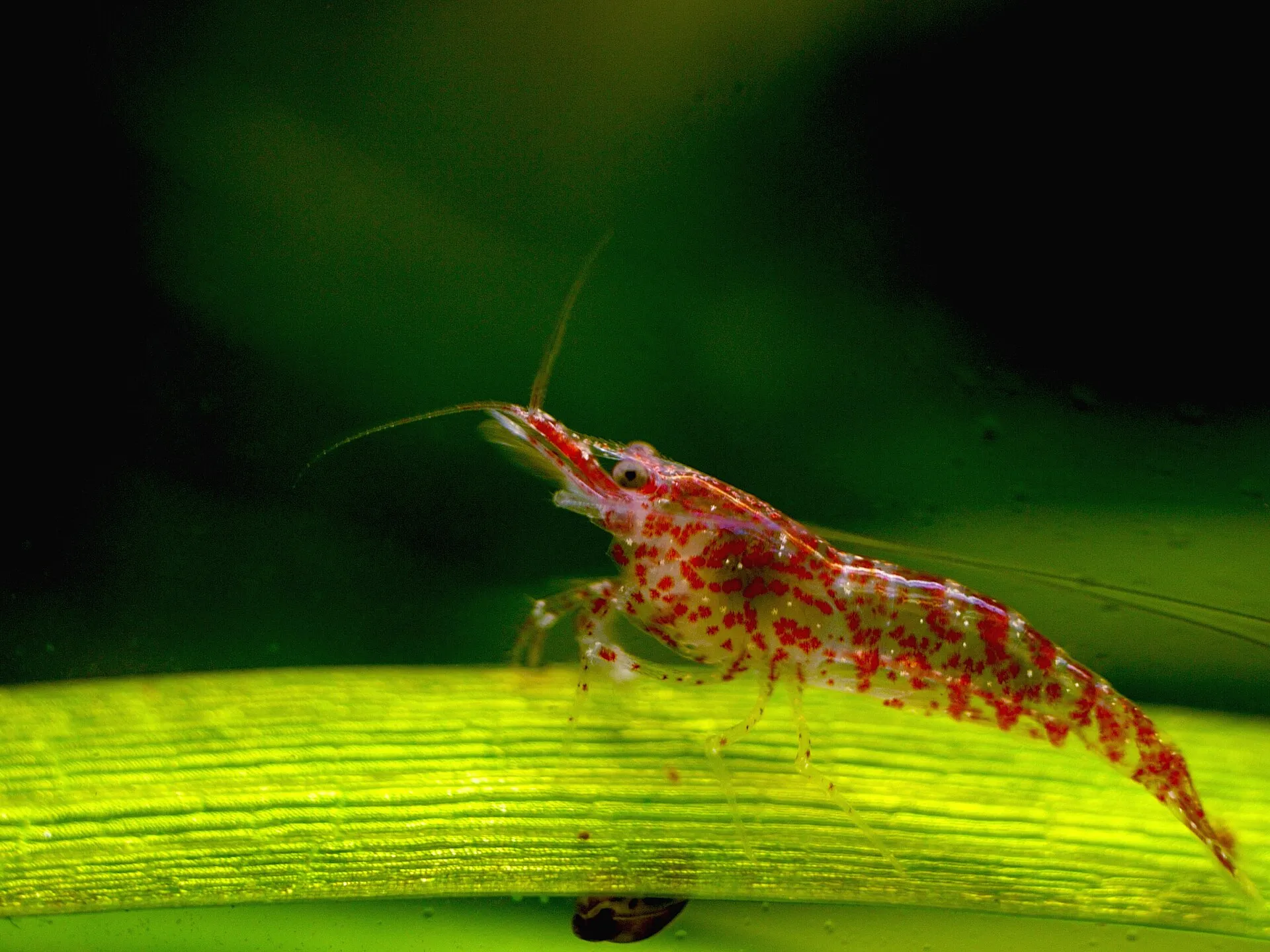
Cherry shrimp are small, slow, and brightly colored. They’re at genuine risk with most bettas. Some keepers successfully keep cherry shrimp with a mellow betta in a densely planted tank where the shrimp have plenty of cover. Others lose every shrimp in a week.
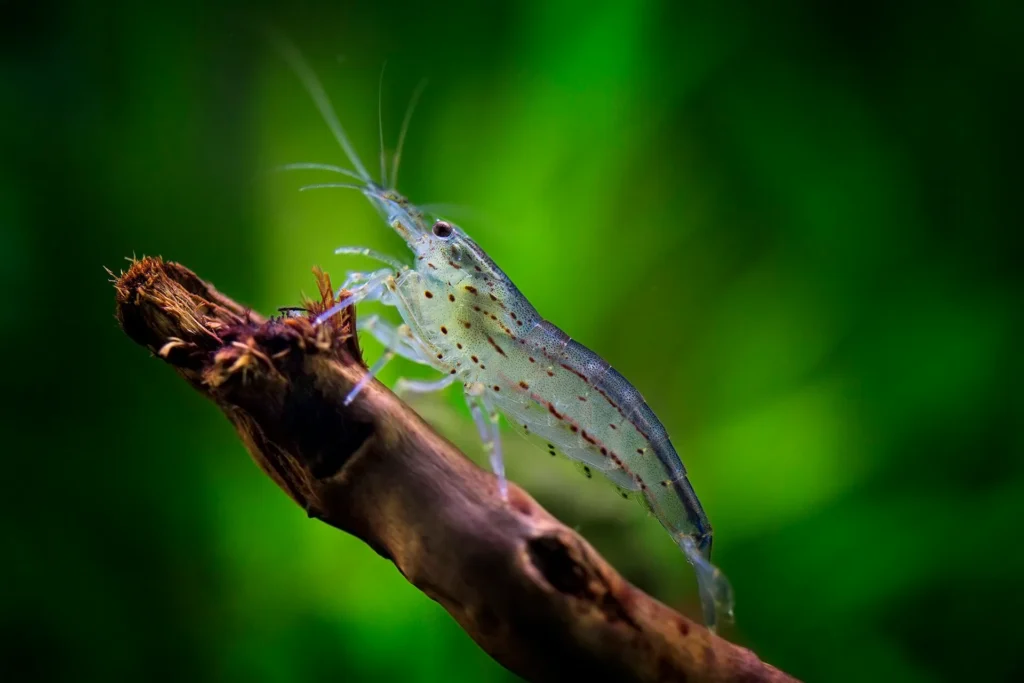
Amano shrimp are larger and faster than cherry shrimp, which improves their odds somewhat. In rare cases, Amano shrimp have been known to eat the fins or body of older, slower, or weakened bettas. This is uncommon, but worth knowing before you add them.
If you want to try shrimp, start small, plant densely, and watch closely. Your betta will tell you quickly whether it’s going to work.
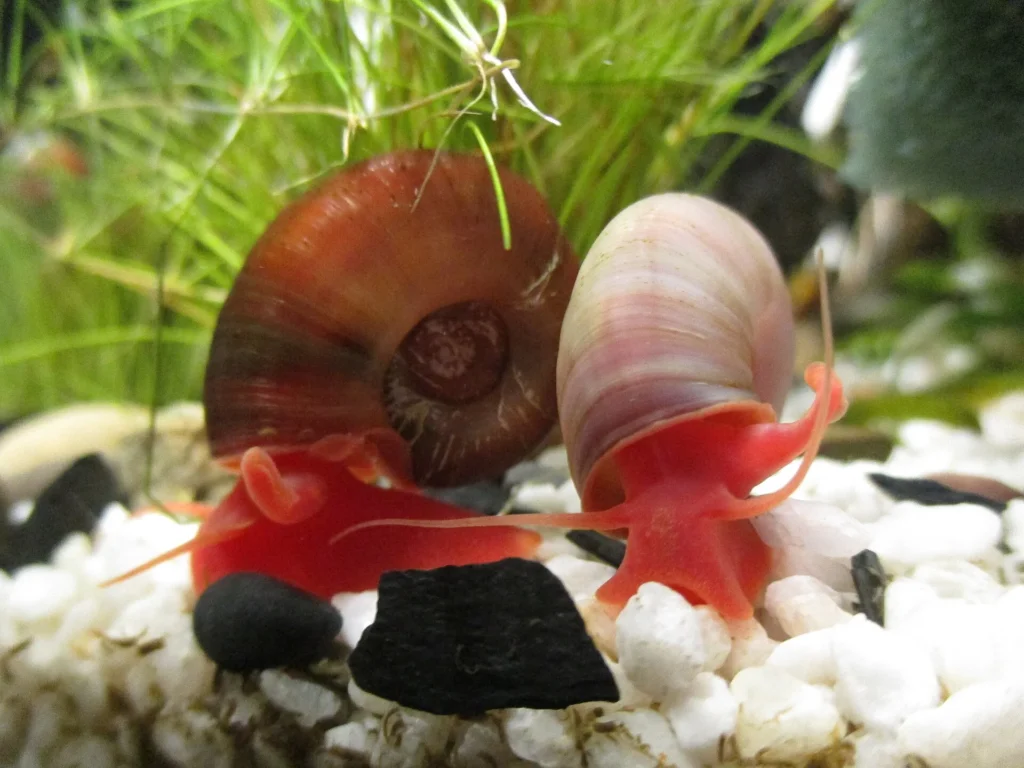
Snails are typically the most betta-compatible invertebrates, because their shells offer real protection. Most bettas ignore snails entirely, though some will poke at antennae or try to flip them. Ramshorn snails and mystery snails are commonly kept alongside bettas. Nerite snails are excellent algae eaters but require an established, well-planted tank and aren’t recommended for beginners.
The One Hard Rule: Male Bettas Cannot Live Together
Male bettas should not be housed together under any circumstances. Two male bettas in the same tank will fight, and someone will get seriously hurt.
Bettas have been selectively bred for fighting ability for more than 600 years.2 That history lives in every male betta you can buy today: the immediate fin-flaring, the gill-cover spreading, the escalation toward biting.2 Domestic bettas are measurably more aggressive than wild-type bettas, because aggression was the entire point of centuries of selective breeding.3
There’s actually a useful insight buried in the research here: a full fight needs both fish to commit to it. In one study, when a corydoras catfish was briefly targeted by a betta, the attacks quickly stopped when the cory didn’t retaliate.1 The species that produced sustained, damaging fights were the ones that escalated back. Paradise fish (Macropodus opercularis) and dwarf gouramis (Trichogaster lalius) both reciprocated aggression and produced fights lasting up to an hour.1 Two male bettas will always escalate back. There’s no tank size, no plant arrangement, no décor setup that reliably prevents this. More space may reduce how often displays happen, but research shows it doesn’t stop attacks when they occur.4
Can Female Bettas Live Together? Sorority Tank Risks
Female bettas can sometimes live together, but that does not make sororities simple, stable, or low-risk. A sorority tank can appear stable for a while, then fall apart fast.
Females are generally less aggressive than males, and research suggests they tend to prefer the company of other females over males.1 In very large, heavily planted setups, groups have been documented coexisting without serious injury.1
But it is only part of the picture. Female bettas still establish dominance hierarchies, and those hierarchies can be brutal. When unrelated females are introduced, the fish at the bottom often end up chronically stressed, hounded, injured, and sometimes killed.1,5 Even a group that looks settled can destabilize with time, maturity, illness, or a change in tank dynamics.
That’s why the real question isn’t whether female bettas can live together. Sometimes they can. The more useful question is whether a sorority is a good risk for most keepers. Usually, it isn’t.
If you attempt one anyway, keeper guidance generally points to a minimum of 40 gallons, very heavy planting, all females added at the same time, and ideally fish raised together from fry. Even then, none of that makes the setup safe in any guaranteed way. It just improves your odds.
You also need a real exit plan before you begin. That means spare tanks, dividers, or somewhere for separated fish to go immediately. If one female starts targeting another, or one fish becomes the constant target of the group, the answer is removal, not hoping they sort it out.
Sororities are not beginner setups, and they’re not a shortcut to keeping more bettas in one tank. They are high-management, failure-prone setups that sometimes work under the right conditions with the right fish.
Worst Betta Tank Mates: Fish to Avoid
Not every fish belongs in a betta tank. Some of these are judgment calls. Others are pretty clear:
- Other male bettas. Already covered, but worth saying twice.
- Fin nippers. Tiger barbs (Puntigrus tetrazona) are probably the most well-known offender, but any fish with a reputation for nipping fins is a problem. Betta fins contain nerve cells, which means fin damage is genuinely painful, not just cosmetic.1 Nipped fins also create entry points for bacterial and fungal infection, which can develop into fin rot.1
- Paradise fish and dwarf gouramis. Skip these. Both species returned aggression against bettas and produced sustained fights in documented observations, including bouts lasting up to an hour.1 These are not fish to experiment with.
- Most cichlids. Many cichlids are aggressive enough to be a problem, and plenty grow large enough to be a straightforward physical threat to a betta. There are gentler cichlid species, but a betta community tank isn’t the place to test unfamiliar ones.
- Common plecos. They get sold as peaceful algae-eaters, and they are, until they’re not. Common plecos grow very large and have been known to rasp at the slimecoats of slow-moving fish. If you want an algae-eater in your betta tank, otocinclus are a much better fit.
Betta Tank Mate Compatibility at a Glance
| Species | Compatibility | Why |
|---|---|---|
| Corydoras catfish | Usually good | Peaceful bottom-dwellers, low overlap |
| Snails | Usually good | Shell offers protection |
| Harlequin rasboras | Often good | Fast, calm, not usually seen as rivals |
| Kuhli loaches | Often good | Shy, bottom-oriented, low-conflict |
| Otocinclus | Often good | Peaceful algae grazers in established tanks |
| Ember tetras | Sometimes good | Small and relatively gentle |
| Amano shrimp | Sometimes risky | Better odds than cherry shrimp, still variable |
| Cherry shrimp | Risky | Often seen as food |
| Tiger barbs | Bad choice | Fin nippers |
| Paradise fish | Bad choice | Escalate aggression |
| Dwarf gouramis | Bad choice | Similar conflict risk |
| Common plecos | Bad choice | Grow large, may rasp slime coat |
| Other male bettas | Never | High risk of severe fighting |
Read More: Betta Tank Mates by Tank Size: What You Can Really Keep in a 5, 10, 20, or 29-Gallon
How to Set Up a Betta Community Tank
Choosing the right species is only half the job. A betta community tank can fail even with “good” tank mates if the setup keeps fish in each other’s faces, forces them to compete for space, or gives stressed fish nowhere to retreat. If you want compatibility to work, the tank has to be built for it.
- Tank size. A single betta can do well in 5 gallons, but a community tank needs more room than that. Extra space gives fish room to spread out, reduces constant contact, and makes it easier for lower-ranking or more timid tank mates to get out of the betta’s way. In practice, most keepers look at 10 to 20 gallons as the starting range for a betta community, with larger tanks giving you better odds. More fish also means more waste, so stocking more heavily means staying more disciplined about water quality and water changes.5
- Plants and visual barriers. This is one of the most important parts of the setup. Plants don’t just make the tank look nice. They break up sight lines, soften territorial behavior, and give fish places to hide and reset. Research supports the broader point here: environmental enrichment, including plants and cover, encourages more natural betta behavior and reduces stress-related behaviors.6
- Layout and swim space. Try to create distinct zones instead of one wide-open box. Hardscape, driftwood, taller plants, and floating cover can all help divide the tank visually so fish are not constantly confronting each other. That matters especially with bettas, which can become fixated on anything they see as an intruder.
- Introducing new fish. Before adding tank mates, rearrange the décor. Breaking up the existing layout can help disrupt territorial claims and make the tank feel new to everyone in it.7 Many keepers also have better luck adding new fish with the lights off and feeding the betta at the same time to redirect attention.7 Then watch closely. A little curiosity or short chasing is one thing. Sustained harassment is another.
- Feeding. Bettas tend to eat their food and then go after everyone else’s. This is especially hard on slower-feeding bottom fish. Feeding your betta at one end of the tank and other fish at the opposite side helps. Adding sinking food for bottom feeders just before lights out, when your betta is less active, is another strategy that works for many keepers.
- Your fallback plan. Before adding any tank mate, know what you’ll do if it doesn’t work. Have a spare tank, a divider, or a rehoming plan ready to go. Some bettas simply won’t share, and the sooner you recognize that, the better it is for everyone in the tank.
The setup does not guarantee success. Nothing does. But it can dramatically improve your odds, and it gives you a much better chance of figuring out whether a problem comes from species choice, tank design, or simply the personality of the fish you have.
Read More: How to Set Up a Betta Tank: A Complete Equipment and Setup Guide
TLDR; Every Betta Is Different
There’s no universal answer to whether your betta will live peacefully with tank mates. The species selection matters, the setup matters, the tank size matters, and your individual fish matters more than any of them.
Start slowly, watch your fish, and trust what you’re seeing. If your betta is flaring constantly, chasing relentlessly, or coming home with shredded fins, something needs to change. If everyone is calm, eating well, and doing what fish do, you’ve figured it out.
Not every betta will want company. That’s okay too.


_-_29_Dec._2008.jpg)
.jpeg)
