Velvet in Betta Fish: What It Is, How to Spot It, and How to Treat It
At a Glance
- Velvet is caused by Piscinoodinium pillulare, a dinoflagellate, not a fungus or bacterium.
- The gold dust coating is easiest to spot with a flashlight in a darkened room.
- Treatment requires copper-based medication for a minimum of 3–4 weeks. The tomont stage can lie dormant for up to 14 days.
- Quarantine new fish for at least 30 days to account for the dormancy window.
If your betta looks like someone sprinkled gold glitter across its body, you’re probably looking at velvet. It’s one of the most common parasitic diseases in bettas, and easy to miss until it’s already done serious damage.
Velvet is caused by a tiny parasitic organism called Piscinoodinium that latches onto your betta’s skin and feeds on its cells.1 It’s not a bacterium or a fungus. It’s a dinoflagellate, a kind of in-between organism related to both plants and animals.6 This guide covers what velvet looks like, how it works, why it kills fry so reliably, and how to treat it.
What Causes Velvet?
The parasite behind freshwater velvet is Piscinoodinium pillulare (sometimes still called Oodinium in older texts and hobbyist forums, though that name is technically incorrect).1 Its marine counterpart, Amyloodinium ocellatum, causes a similar disease in saltwater fish.
Piscinoodinium is a dinoflagellate, a single-celled organism that shares characteristics with both algae and protozoa.6 Some species even have chloroplasts, which means they can photosynthesize. This is why one of the treatment strategies involves turning the lights off (more on that later).
Both domestic and wild bettas are susceptible to velvet.3 The parasite thrives where water quality has declined, and it probably exists in most aquariums at low levels.3 A healthy betta’s immune system can keep it in check, but once stress or poor conditions compromise that defense, the parasite multiplies fast.
What Does Velvet Look Like?
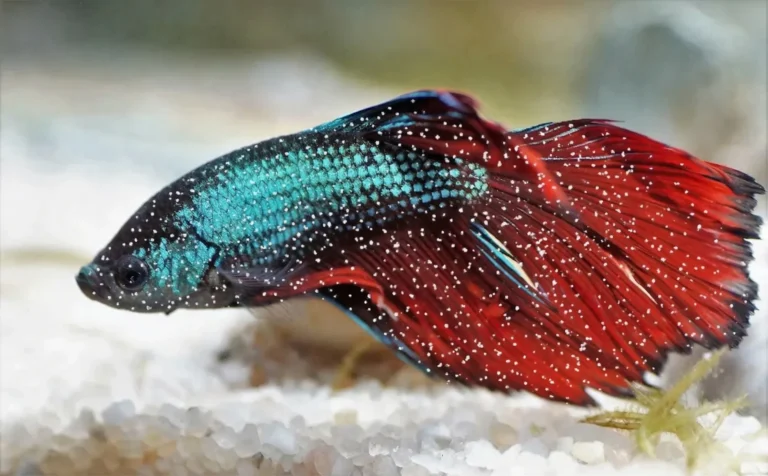
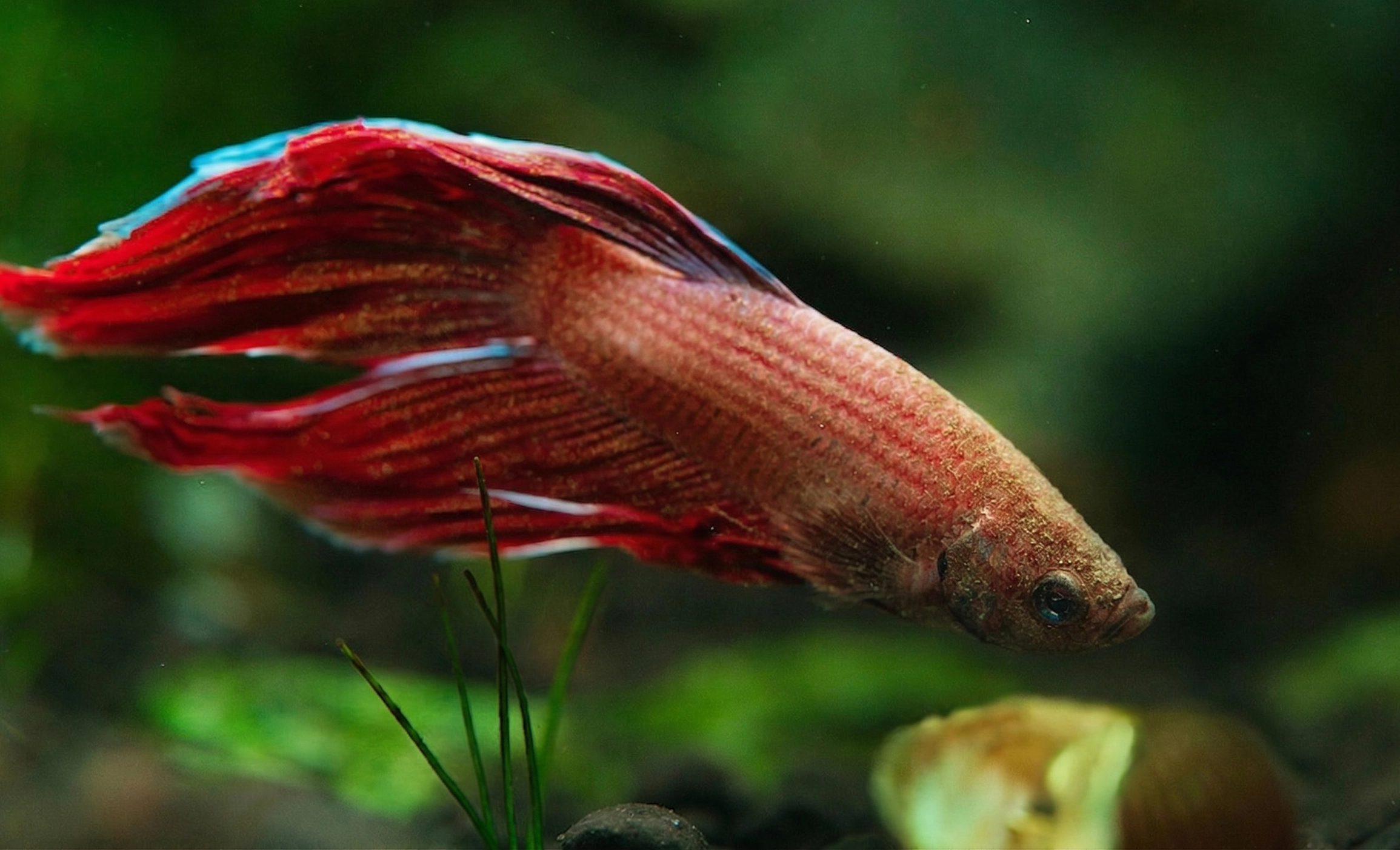
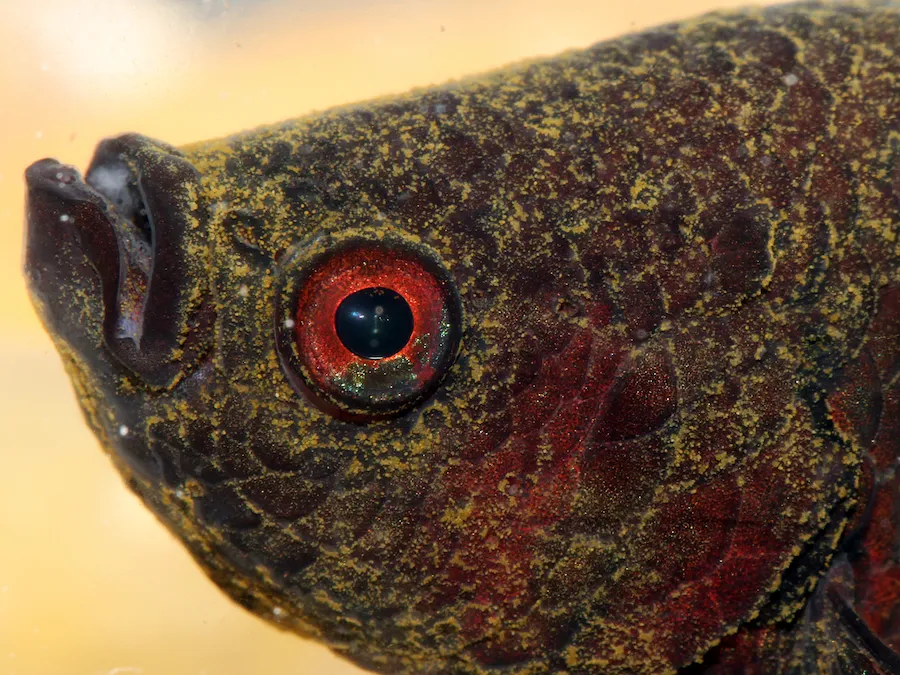
The classic sign is a fine, gold or rust-coloured coating over your betta’s body and fins, like someone dusted it with metallic powder.2, 5 That’s where the names “velvet,” “gold dust disease,” and “rust disease” come from.
Velvet is much harder to spot than ich. The individual parasites are microscopic (around 20-100 µm), and in the early stages you might not notice anything just looking at your betta head-on.
The flashlight test: The most reliable way to spot velvet is to shine a flashlight at an angle across your betta’s body in a darkened room.3, 5 The parasitic cysts catch the light and produce a distinctive gold shimmer that you won’t see under normal tank lighting.
Behavioural Signs
Before the gold dust becomes visible, your betta will usually show these changes:5, 7
- Clamped fins: fins held tight against the body
- Lethargy: less active than usual, sitting on the bottom
- Loss of appetite: refusing food or eating less
- Flashing: rubbing or flicking against tank décor, gravel, or plants
- Laboured breathing: faster gill movement or gasping near the surface
If you see clamped fins and flashing together, grab a flashlight and check for that gold dust. Don’t wait for it to become obvious.
How Does Velvet Work?
Understanding the life cycle explains why velvet spreads so fast, and why treatment needs to target specific stages.
The Life Cycle
Velvet has three stages:1
- Trophont (feeding stage): The parasite attaches to your betta’s skin and forms a hard protective shell around itself.5 While inside this cyst, it feeds on your betta’s skin cells and body fluids.6 This is the “gold dust” stage you can see. Copper and medications cannot penetrate the cyst, which is why a single dose rarely works.
- Tomont (reproductive stage): After feeding for several days, the trophont detaches from the fish, sinks to the substrate, and encysts.1 Inside this cyst, it divides rapidly, producing dozens of new free-swimming parasites. Warmer water speeds this process up.
- Dinospore (free-swimming stage): The cyst releases a swarm of dinospores that swim through the water searching for a host.5 They have about 48 hours to find one, or they die. This is the only stage that’s vulnerable to medication.
Why It’s So Dangerous
In heavy infections, the parasites invade the gills, causing respiratory distress that can kill the fish within 2-3 days.4 The gills become inflamed and overgrown, making it harder for your betta to breathe.1
Heavy gill infestations can result in death without obvious external signs.4 A betta can look relatively normal from the outside while its gills are being destroyed.
How to Treat Velvet
Treatment works by targeting the free-swimming dinospore stage, which is the only stage vulnerable to medication. The goal is to speed up the life cycle so the trophonts release their dinospores faster, then kill those dinospores before they can reattach.
Step 1: Darken the Tank
Turn off the aquarium lights completely and cover the tank with a towel or dark cloth to block ambient light. Because Piscinoodinium has photosynthetic capabilities, darkness deprives the organism of energy and weakens it.6
Darkness alone won’t cure an outbreak, though. The encysted tomont stage can sit dormant in your substrate for up to 14 days before releasing new dinospores. Keep the tank dark for the full treatment period.
Step 2: Raise the Temperature
Increase the water temperature gradually to 28–30°C (82–86°F).5 Higher temperatures speed up the parasite’s life cycle,1 forcing the trophonts to detach and release dinospores faster, which exposes them to medication sooner.
Raise the temperature slowly (no more than 1°C per hour) to avoid shocking your betta.
Important: Add an airstone or increase surface agitation before raising the temperature. Warmer water holds less dissolved oxygen, and velvet attacks the gills directly. A betta with gill damage struggling in oxygen-depleted water is a betta in serious trouble. Don’t skip this step.
Step 3: Medicate
Copper-based medications are the standard treatment for velvet.1, 3, 6 Copper kills the free-swimming dinospore stage and is the active ingredient in most dedicated velvet treatments. Accessible hobbyist options include CopperSafe and Seachem Cupramine. Follow product dosing instructions exactly.5
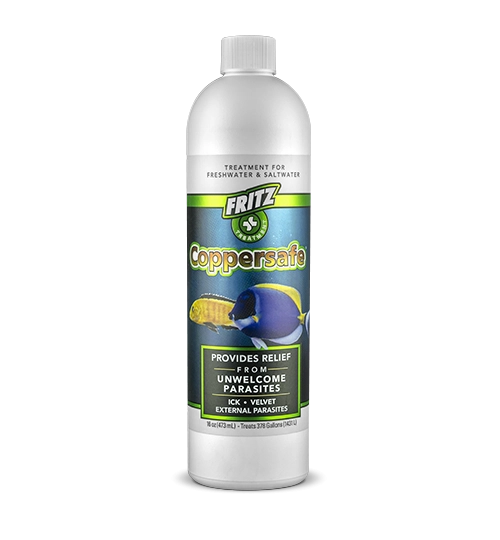
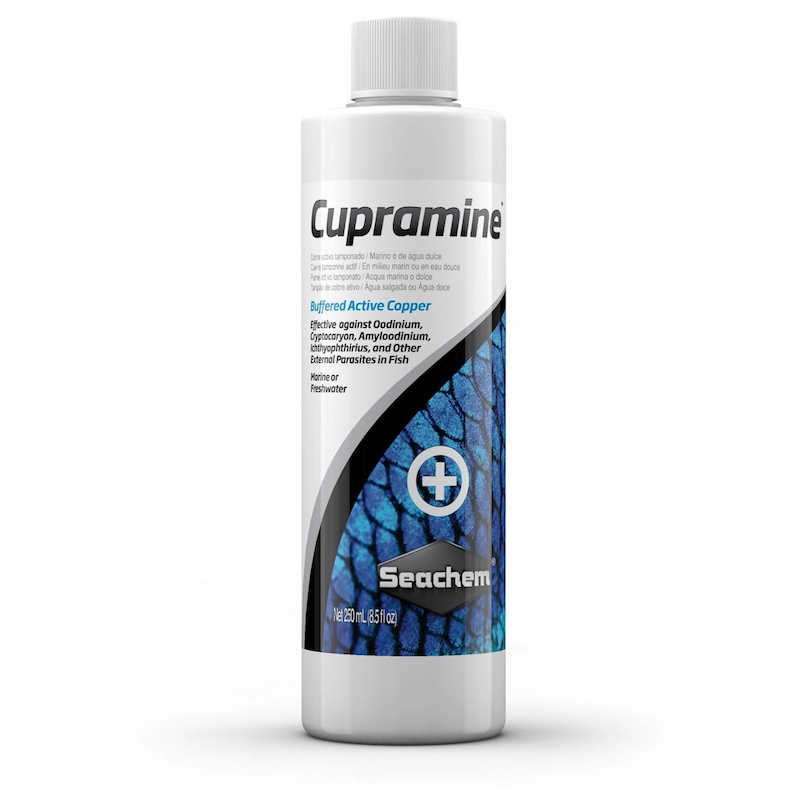
Copper is toxic to invertebrates (snails, shrimp) and must not be used in tanks containing them. Treat in a hospital tank to keep your main tank invertebrate-safe and to protect your biological filter.
Treat for a minimum of 3-4 weeks. This is critical. Because the tomont stage can remain dormant in the substrate for up to 14 days before releasing new dinospores, a short treatment course can end just as the next wave of parasites hatches. Maintain medication and darkness together for the full 3–4 week window.
Step 4: Maintain Water Quality During Treatment
Do daily water changes throughout the treatment period. This serves three purposes: it removes free-swimming dinospores from the water column, keeps ammonia and nitrite in check (especially important in an unfiltered hospital tank), and replenishes fresh medication with each change.
Using Aquarium Salt to Treat Velvet
Aquarium salt supports gill function and osmotic balance, helping your betta cope with the combined stress of the infection and treatment.3
There are two ways to use salt to help your fish recover from velvet9:
Option 1: The Long-Term Bath (Best for overall recovery)
This is the gentlest method and treats the entire environment to prevent the parasite from spreading.
- Dosage: Add 1 teaspoon of aquarium salt for every 5 gallons of water in your tank.
- Duration: Maintain this salt level for 10 to 14 days.
- Tip: When doing water changes during this period, only add enough salt to treat the new water you are putting in so you don’t accidentally double the dose.
Option 2: The Quick Salt Dip (Best for heavy infestations)
If your fish is heavily coated in parasites, a quick dip can help knock the parasites off their skin immediately.
- Dosage: Prepare a separate container with a concentration of roughly 2 rounded tablespoons of salt per gallon (this equals about 35 mg/l).
- Duration: Gently place the fish in the dip for 1 to 3 minutes.
- Watch Closely: If the fish shows signs of extreme distress (rolling over or gasping), move them back to freshwater immediately.
Important Note: When adding salt to an aquarium, we recommend dissolving the salt in a small container of aquarium water first before adding it to the tank to avoid “burning” fish or plants with highly concentrated salt grains.
Important Note About Secondary Infections
When the parasites die and fall away from the skin, they leave open wounds that are vulnerable to bacterial invasion.6 Monitor your betta closely after treatment for signs of secondary bacterial infection (redness, ulcers, or fin deterioration). You may need to follow up with an antibacterial treatment if secondary infections develop.
How to Prevent Velvet
Velvet flourishes where water quality has declined.3,6 Prevention comes down to the same fundamentals that protect against most betta diseases:
Keep the water clean
Poor water quality is the most common stressor that leads to disease outbreaks in fish.8 Regular water changes, proper filtration, and prompt removal of uneaten food and debris are your best defense. When organic debris accumulates, bacteria feeding on it consume oxygen and release waste products that stress your fish and create conditions where parasites thrive.3, 8
Quarantine new fish
This cannot be overstated. Every new betta you bring home should be quarantined in a separate tank for at least 30 days before being introduced to your existing fish. Because the tomont stage can lie dormant for up to 14 days, a 14-day quarantine can end exactly when the parasite decides to hatch. A 30-day window catches it. Velvet is highly contagious, and one infected fish can spread it to an entire collection.
Avoid overcrowding
Overcrowding increases stress and makes it easier for parasites to find new hosts.1 In grow-out tanks with fry, this is especially critical as velvet spreads explosively in a crowded fry tank.3
Maintain stable conditions
Stress compromises your betta’s immune system, making it unable to fight off pathogens it would normally resist.8 Temperature fluctuations, poor nutrition, and environmental disturbances all count as stressors. A healthy, well-kept betta can withstand a velvet infection for weeks.3 A stressed one might not survive days.
The Bottom Line
Velvet is one of the sneakiest diseases in the betta hobby. It’s hard to see, it moves fast, and it’s devastating to fry. But it’s also very treatable when you catch it early.
Get in the habit of doing the flashlight test regularly, especially after adding new fish, during water quality hiccups, or anytime your betta seems “off.” Clamped fins, lethargy, and flashing are your early warning signs. If you see that gold shimmer, act immediately: lights off, heat up, medicate, and do daily water changes for the full treatment course.
And as with just about everything in betta keeping, the best medicine is prevention. Clean water, stable conditions, and a strict quarantine protocol will keep velvet from ever becoming a problem.