 Annie
Key Takeaways
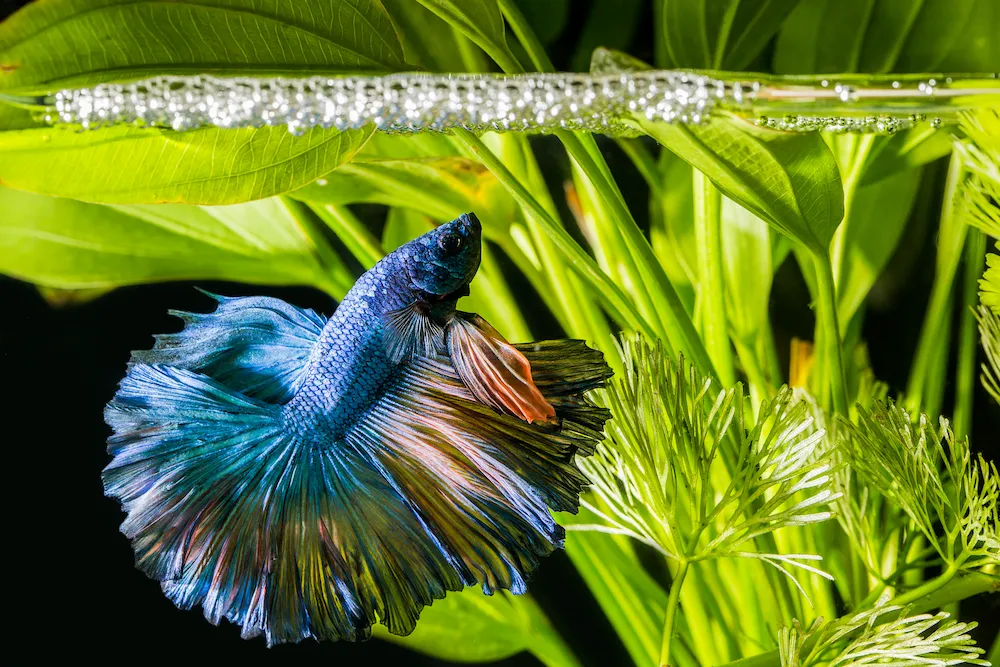
- A betta bubble nest is a patch of bubbles that floats on the surface. The male betta makes it by gulping air and blowing out sticky, saliva-coated bubbles that stick together, usually under a leaf. In the wild, nests are pretty small, about 1.6 by 1.1 inches on average.
- Male bettas build bubble nests even if there’s no female around. It’s just something they do by instinct, and a healthy male living alone will often make one anyway.
- A bubble nest is a good sign, but it only tells you a little. It means your male betta is ready to breed and the water is in the right temperature range for nesting. In one old study, males didn’t build nests below about 76°F or above about 82°F.
- If your male betta never builds a bubble nest, it doesn’t mean he’s sick. Some males build big nests, some barely build at all, and none of the research or vet sources I checked treat a missing nest as a sign of illness.
- You don’t need to protect a bubble nest during water changes. If there are no eggs in it, the nest isn’t guarding anything, and your betta will just rebuild when he feels like it.
A bubble nest is a group of sticky bubbles that a male betta makes at the water’s surface. In the wild, this is where the eggs go after spawning. He builds it even if there’s no female nearby, since it’s an instinct, not a response to company.
This is normal and harmless, and you don’t need to do anything about it. You can leave it if you like, or let it break up during a water change if it’s in the way. If your male never builds one, that’s normal too.
What Is a Bubble Nest?
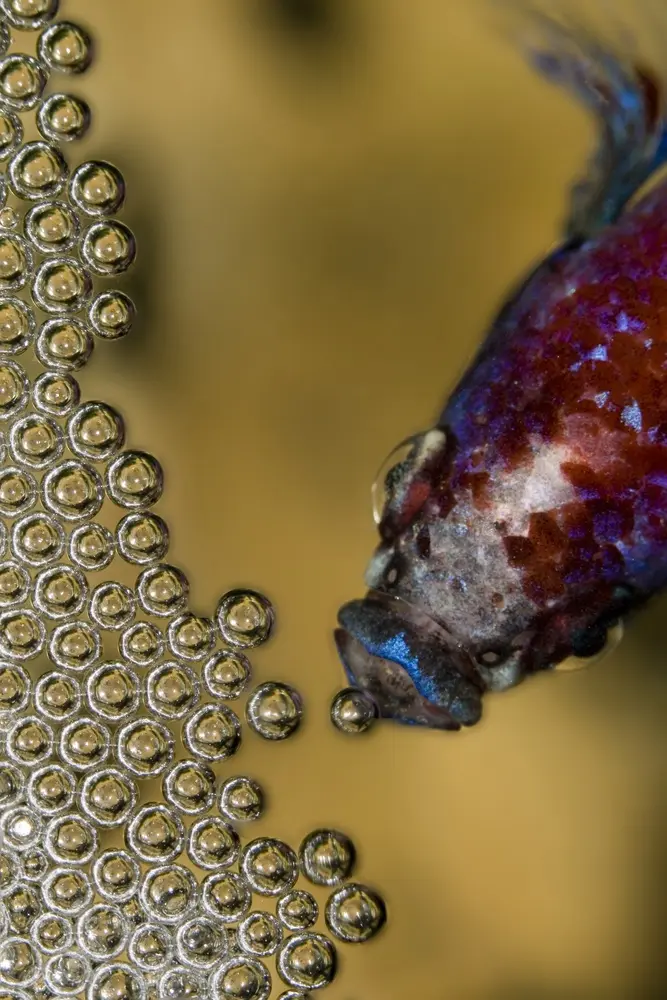
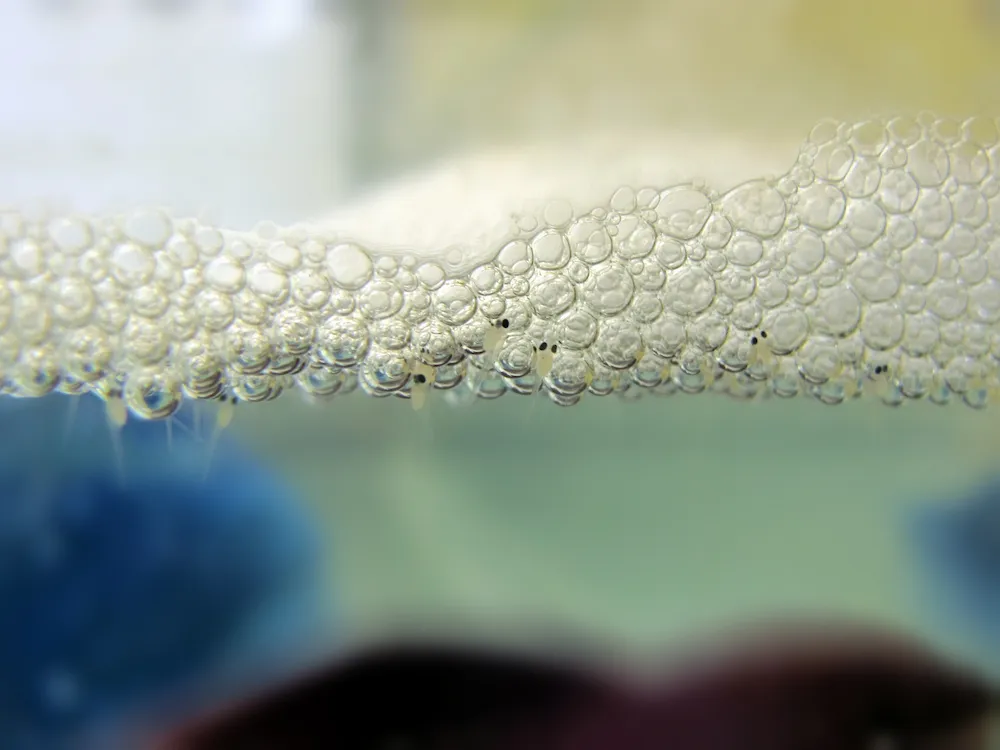
It’s a floating group of bubbles, each coated in saliva so they stick together. The male takes air at the surface and blows bubbles with saliva, which clump together as he works.² The air comes from the labyrinth organ in his head, which lets him gulp air from the surface and also supplies the bubbles for nest building.¹
When he’s finished, the nest is shaped like a lens. You might see it floating on the open surface or tucked under a leaf.³
How big is a bubble nest?
Researchers measured 64 nests built by wild bettas in Thailand:⁵
| Measurement | Average | Range |
|---|---|---|
| Length | 1.6 in (42 mm) | 0.5–3.3 in (12–83 mm) |
| Width | 1.1 in (29 mm) | 0.3–2.3 in (8–58 mm) |
| Thickness | about 1/8 in (3.5 mm) | up to about 0.6 in (15 mm) |
| Eggs, when there were any | 370 | 165–964 |
Larger males usually build bigger nests, but the connection isn’t strong.⁵ Nests in tanks can be much bigger or smaller. One breeder says some males’ nests “almost cover the water surface” of a small spawning tank, while others “barely produce a nest at all.”²
Is it a nest or just bubbles?
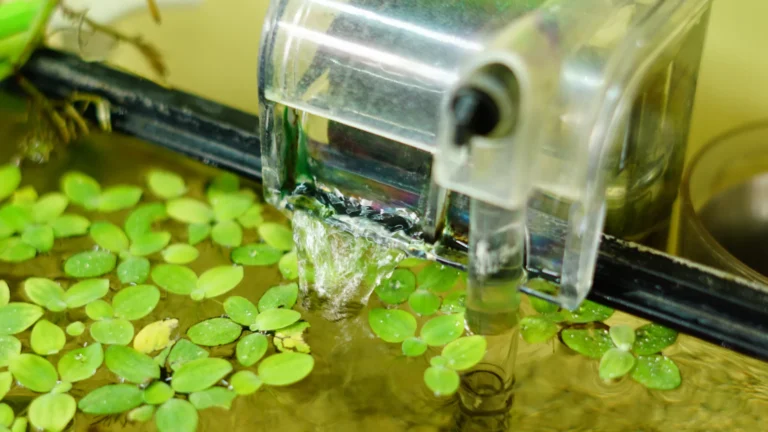
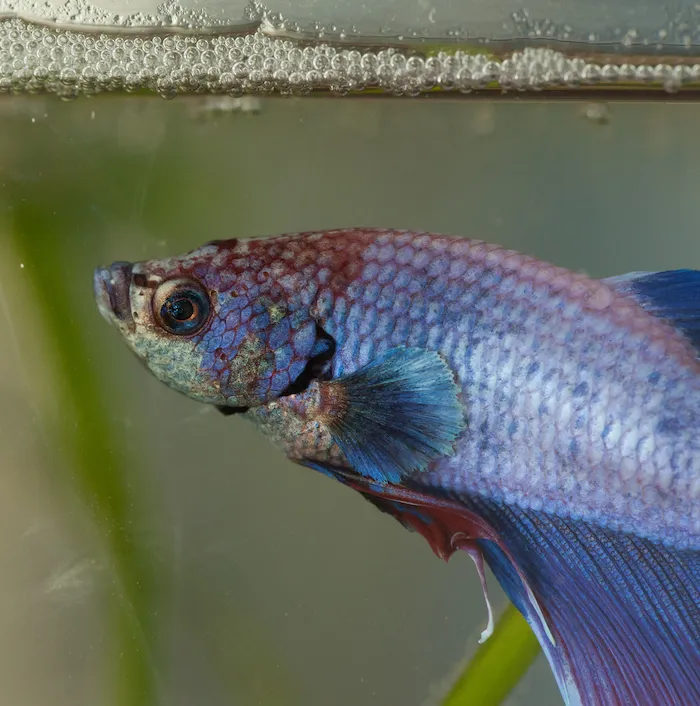
Not every bubble at the surface is a nest. If you pour in new water or your filter splashes the surface, you’ll get bubbles that float around and pop quickly. A real nest is a tight cluster that stays put, gets bigger over a day or two, and usually has your betta hanging out underneath. If you watch him, you might see him come up, gulp air, and add bubbles to the bottom.
Why Do Bettas Build Bubble Nests?
The main reason is breeding. The nest sits in the middle of the male’s territory and does two things: it marks the spot as his, and it’s where the eggs go.¹
This works because of where bettas live. Wild bettas are found in shallow, warm, still water at the edges of rice paddies, which are often low in oxygen.⁴ ⁵ Eggs that sink would have a hard time surviving. In a nest at the surface, they get better oxygen and stay moist.⁴ In the Thai study, all 64 wild nests were built among plants growing up through the water near the paddy edges.⁵
Here’s what happens after a spawn:
- The male catches the eggs as they fall and places them in the nest.²
- The eggs hatch in roughly 24 to 48 hours.⁶
- The fry stay in the nest for another 3 to 4 days, living off their yolk sacs.⁶
- Any that drop out, he picks up in his mouth and puts back.³
- If something threatens the nest, he may move the whole thing.⁶
Worth knowing: not every betta species builds nests. Some wild Betta species are mouthbrooders. The male carries the eggs in his mouth instead, and those species live in running water, where a bubble nest would be swept away.³
Does a Bubble Nest Mean My Betta Is Happy?
Partly. You’ll often hear that a bubble nest means a happy betta, and that’s not wrong. There’s just more to it than a nest can show.
This idea has been around for a long time. In 1934, two researchers studied when male bettas built nests and called nest building “a sign of well-being.”¹ A popular betta book says something similar: males “in good condition that are kept in isolation will usually blow bubblenests” even without a female nearby.²
What a nest reliably tells you is narrower:
- He’s sexually mature and in breeding condition. That’s what the behavior is for.
- The water is in the right range for nesting. In that 1934 study, males didn’t build nests below 24.4°C (about 76°F) or above 27.7°C (about 82°F). Most nests were built at 26.6°C, about 80°F.¹
But a nest doesn’t tell you everything. It doesn’t say anything about ammonia, fin condition, or whether he’s eating. Check those things by looking at your fish, not the bubbles.
Read More: Signs of a Stressed Betta (and How to Fix It)
My Betta Doesn’t Make Bubble Nests. Is Something Wrong?
Probably not. Some males build a lot of nests, and some hardly build at all.² Even breeders don’t need a nest to know if a male is ready to breed: the same book says it “is not essential for a male to have built a bubblenest for you to know he is ready for breeding.”² We couldn’t find any veterinary or research source that treats a missing nest as a symptom of anything.
If he eats well, keeps his color, and explores his tank, he’s doing fine with or without a nest.
There are a few things that can make nesting less likely, so it’s worth checking them if you’re curious:
- Temperature. If the tank runs below about 76°F, that alone may explain it.¹ A betta tank needs a heater for plenty of other reasons anyway.
- Surface current. Bettas that build nests prefer still water.³ A filter that stirs up the surface will break up bubbles as fast as he makes them.
- Nowhere to anchor. Wild nests are built among plants,⁵ and even research labs float a leaf in each breeding tank for the male to build under.⁸ A floating plant or a betta leaf near the surface gives him a place to start.
Don’t change your setup just to get a nest, though. A nest is a bonus, not a goal.
Read More: Is My Betta’s Filter Too Strong?
Should I Remove a Bubble Nest?
You don’t have to remove it, and you don’t have to protect it either. Without eggs in it, a nest is just bubbles, and he’ll rebuild whenever he’s in the mood.
The only time you should leave a nest completely alone is if it has eggs in it. That only happens if he’s spawned with a female, so it won’t come up in a single-betta tank.
Read More: Betta Tank Cleaning and Water Changes
Quick Recap
- What it is: a group of sticky, saliva-coated bubbles that a male betta blows at the surface, often under a leaf.
- Why he builds it: it marks his territory and holds the eggs after spawning. He’ll build one even if there’s no female nearby.
- What it means: he’s mature and ready to breed, and the water is warm enough for nesting. It’s a good sign, but not a full health check.
- No nest? That’s common and not a problem. Some males hardly build nests at all.
- What to do about it: nothing. You can leave it or let it go during water changes. He’ll rebuild.