 Annie
Annie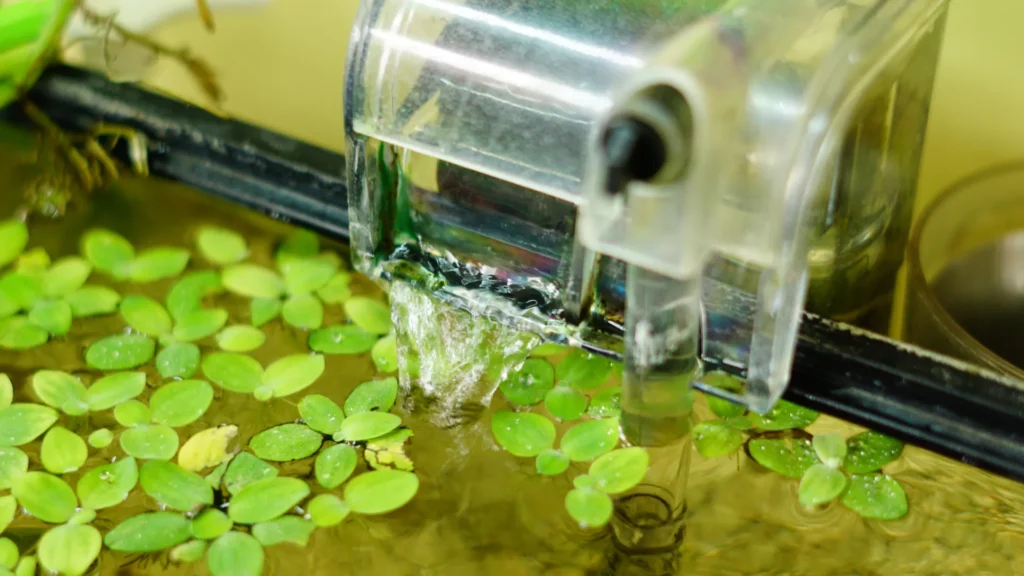
Key Takeaways
- A filter can absolutely be too strong for a betta. Bettas are built for calm water, not strong currents, and a powerful filter just makes life harder for them.
- The easiest way to tell is to watch your betta. If you see it getting pushed around, hiding in the calmest spot, or resting on the bottom more than usual, your filter is probably too strong.
- You can fix this without buying anything. A baffle made from a clean plastic bottle or an aquarium sponge will usually calm a hang-on-back filter enough for a betta.
- Don’t turn the filter off. If you stop the flow completely, you just trade one problem for another, since water quality will drop. Aim for a gentle ripple on the surface, not still water.
- Torn fins aren’t the same thing as fin rot, at least not right away. If the water is clean, damage from strong current usually heals on its own, but torn fins can get infected. Fix the flow first, then watch the edges for any changes.
Your betta swims across the tank, passes the filter outflow, and gets pushed to the side. Now he spends all his time in the one corner where the current can’t reach him, and you’re starting to worry something might be wrong.
Your betta isn’t sick. The current is just too strong, and this is one of the easiest problems to solve. Most aquarium starter kits come with hang-on-back (HOB) filters, the kind that pour water in like a little waterfall. Those are made for fish that like moving water. Bettas aren’t those fish.
Note: Some of the links in this article are affiliate links, which means that if you buy through one, KnowBetta may earn a small commission at no extra cost to you.
Why Bettas Need Calm Water
Bettas really do prefer calm water, and strong filtration can actually harm their health and well-being.² There are a few reasons for this:
The wild ancestors of your betta lived in rice paddies, roadside ditches, shallow ponds, and swamps across Southeast Asia. In short, they evolved to survive in standing water, thick with plants.², ³ On top of that, many of our modern domesticated bettas have been bred for beautiful long fins that can act like sails, catching the current and pushing the fish around.
Being a labyrinth fish makes surface access even more important. Bettas breathe air through a special organ above their gills, which lets them survive in water with levels of oxygen that would kill most other aquarium fish.⁴ Your betta needs to reach the surface often, all day long. A strong current makes every trip to the surface a struggle.
Do Plakats Handle Strong Currents Better Than Other Types of Betta?
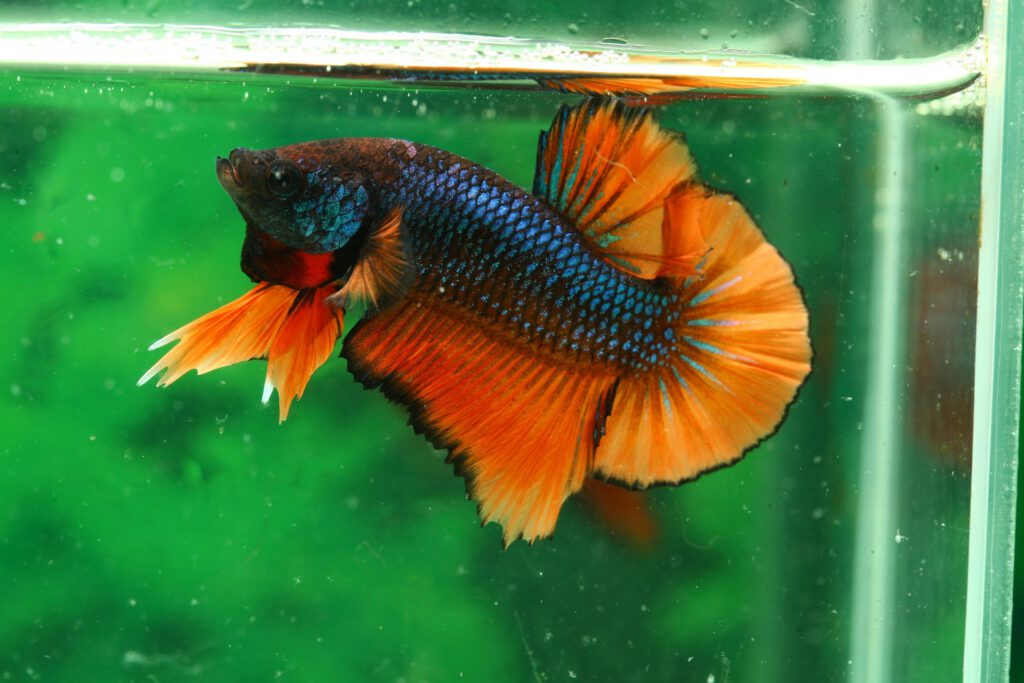
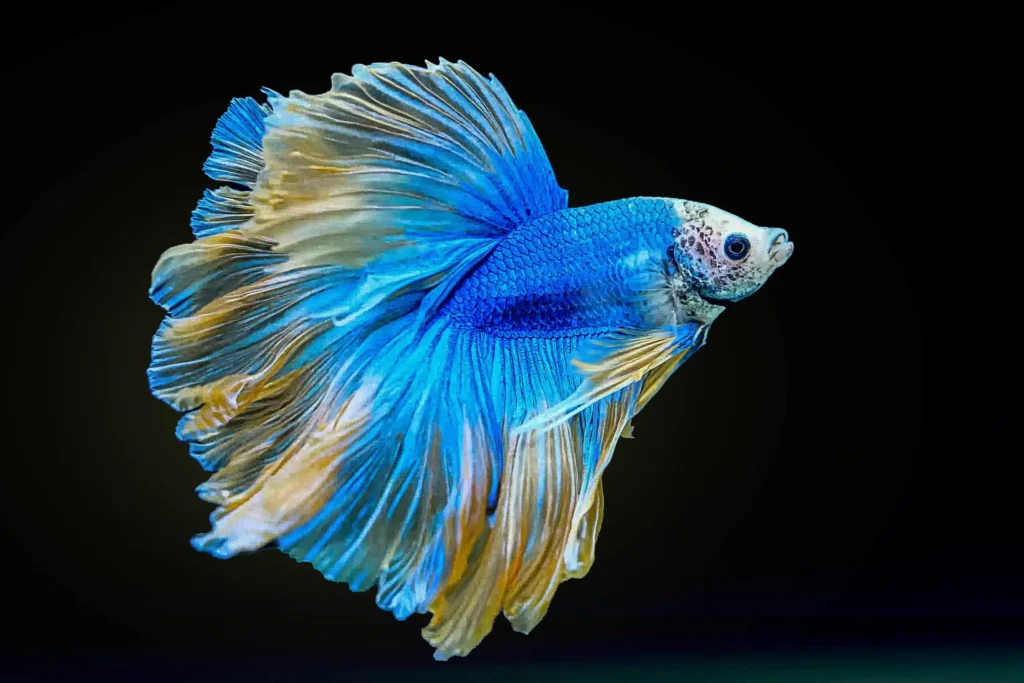
A lot of people believe that short-finned plakats can handle water flow better than long-finned types like halfmoons and veiltails, but no one has actually tested this. The research says there’s no data on whether fin type changes how well bettas swim.⁴ It’s a reasonable guess, but not a proven fact. No matter what kind of tail your betta has, none of them really like strong current.
“But My Betta Plays in the Current”
Some bettas seem to ride the outflow on purpose, and people often debate what this means. Some say the fish is playing, while others think it’s just being pushed around. If your betta is really playing, it will swim into the current on purpose, leave it easily, and spend most of the day doing normal betta things elsewhere. A betta in trouble gets caught by the current, struggles to get out, and spends its day trying to avoid it. The only way to know if your filter is too strong is to watch your fish.
How to Tell If Your Filter Is Too Strong
A filter can be the right size for your tank and still be too strong for a betta. The number on the box tells you how much water the filter can process, not how strong the current feels in the tank. What matters to your fish is the current, not the gallons per hour.
Your filter’s current may be too strong if you notice any of the following:
- Your fish gets pushed off course: Your betta aims for one spot and arrives somewhere else, or visibly fights to hold position while crossing the outflow’s path.
- It spends all its time in one corner: The whole day happens in the same dead spot, usually the corner farthest from the filter, the gap behind the heater, or a spot tucked behind a plant, with only quick bursts across open water.
- It’s struggling at the surface: Your betta gets pushed away while trying to gulp air, or eats quickly because food moves too fast across the surface.
- It has frayed fin edges with no other symptoms: A strong current can tear delicate fins directly or drag them against decorations.
If your betta has been fighting a strong current for weeks, it can start to look sick. You might see it acting listless, keeping its fins clamped close, or not wanting to eat. Chronic stress makes fish more likely to get sick, and strong water flow is one of the stressors researchers have tested on bettas.¹,² Sometimes, a betta that looks sick in a strong current just needs a baffle, not medicine.
Read More: Signs of a Stressed Betta (and How to Fix It)

How to Fix a Filter That’s Too Strong
These fixes are for HOB filters, which hang outside the tank and pour water back in over a lip. Most beginners end up with this type, and they’re known for being too strong for bettas.
If your filter sits inside the tank or in the hood and returns water through a nozzle under the surface or a slot in the back wall, you have an internal filter. The same general ideas work, and there’s a short section for you below.
The usual fix for HOB filters is a baffle. That’s just a simple shield that softens the water flow as it comes back into the tank. You can buy pre-made baffles, but homemade ones work just as well.
How to Make a Water-Bottle Baffle
- Start with a clean plastic drink bottle. A 2-liter bottle gives you the widest, flattest panel, but any bottle will work. Rinse it with hot water only. Don’t use soap, since any residue can be harmful.
- Cut a rectangular panel from the side, a little wider than your filter’s outflow and a couple of inches longer. Round off the corners so nothing sharp is near the fins.
- Unplug the filter and tuck the panel under the outflow lip (the edge the waterfall pours over) so it forms a ramp, curving to follow the water’s path. The lower edge should meet the surface, not hover above it. This way, the waterfall lands on the plastic, loses its force, and slides gently into the tank.
- Hold it in place with a wedge cut from the rest of the bottle, or with tape that stays completely above the waterline. Never put anything sticky below the surface.
- Check the surface of the water. You want a gentle ripple, not a strong churn. Adjust the angle until it looks right.
- Watch the filter for the first five minutes. Water should still exit freely. If the baffle blocks the outflow, water could spill over the back of the filter and onto your floor.
Plastic drink bottles are food-grade, which is why they’re the standard material. The rule for anything you add to an aquarium: food-grade or made-for-aquarium materials are safe, while unknown plastics can leach chemicals into the water.⁶
For the same reason, I would avoid 3D-printed baffles sold online. Unless the seller says the material is aquarium-safe, you’re trusting an unknown plastic.
How to Make a Sponge Baffle
If you want a tidier option than a plastic bottle, a sponge baffle is another easy fix. It also gives beneficial bacteria an extra place to grow.
- Buy a block of coarse, open-cell aquarium filter sponge. It needs to be bigger than the outflow lip on all sides, with enough thickness to hold its shape once you cut it.
- Rinse the sponge in tank water or dechlorinated water to remove any loose bits of foam.
Trim it to a block a little wider than the outflow and a couple of inches deep. - Cut a slit lengthwise into one side, about halfway through, so the block opens up like a hot dog bun.
- Slide the slit over the outflow lip so the sponge saddles it, with the lower edge resting on the water. Water will seep through the foam instead of pouring over the lip.
- Watch the filter box for a few minutes. If water backs up behind the sponge, trim it thinner or widen the slit. If the sponge blocks the outflow, it can cause the same overflow problem as a blocked bottle baffle.
Don’t use a regular household sponge. Most of them are treated with chemicals to kill bacteria, which is the last thing you want in a fish tank. Use a sponge made for aquarium filters,⁶ and rinse it during water changes so it doesn’t get clogged with gunk.
Consider Adding an Intake Sponge
You can also slow the flow by putting a pre-filter sponge over the filter’s intake tube. This softens the suction to protect long fins from being pulled in, and it also slightly lowers the overall flow through the filter.
Rinse the sponge every week in a cup of tank water you’ve taken out during a water change. Don’t use chlorinated tap water, since it will kill the helpful bacteria living in the sponge.⁷
This method, unlike an outflow baffle, really does reduce the amount of water the filter handles. If you forget to rinse the intake sponge and it gets clogged, the filter’s flow can slow down a lot.
Add Plants Under the Waterfall
Putting tall silk or live plants under the filter’s outflow helps break up the current before it spreads across the tank. Floating plants can also calm the surface. This fix looks good and gives your betta places to hide. Bettas often like to rest under plants.³
If you use fast-growing floating plants like duckweed, be sure your betta still has some open water at the surface to breathe. Many people use a feeding ring to keep a clear spot for their fish to eat and get air.
If You Have an Internal Filter
There’s no waterfall to baffle with an internal filter, so you can skip the ramps and baffles. Here are your options:
- Rotate the outlet toward the nearest glass (most swivel).
- Fit a slit block of aquarium sponge over the nozzle, the same way as the sponge baffle.
- Put plants in front of the return.
- If the filter is a cartridge box, add a strip of coarse aquarium sponge inside the chamber.
When to Switch Filters
If your HOB filter is too big for your tank and doesn’t have a flow control, you can get by with a baffle, but a sponge filter is often a better long-term fix. Sponge filters run on air, are gentle by design, and you can adjust the flow with a cheap valve on the airline.
When you switch, move the old filter’s media (the cartridge or sponge inside, where the helpful bacteria live) into or next to the new filter for a few weeks so the bacteria carry over.
If you’re choosing equipment from scratch, the tank setup guide covers filter choice in detail.
How You’ll Know It Worked
The fish starts exploring the whole tank again. He patrols all areas, rests less, and can cross the front of the tank without being pushed aside.
Most keepers notice a change within a few days after calming the flow, though there is no official timeline. If nothing changes in a week, review the signs list again; something else might be happening.
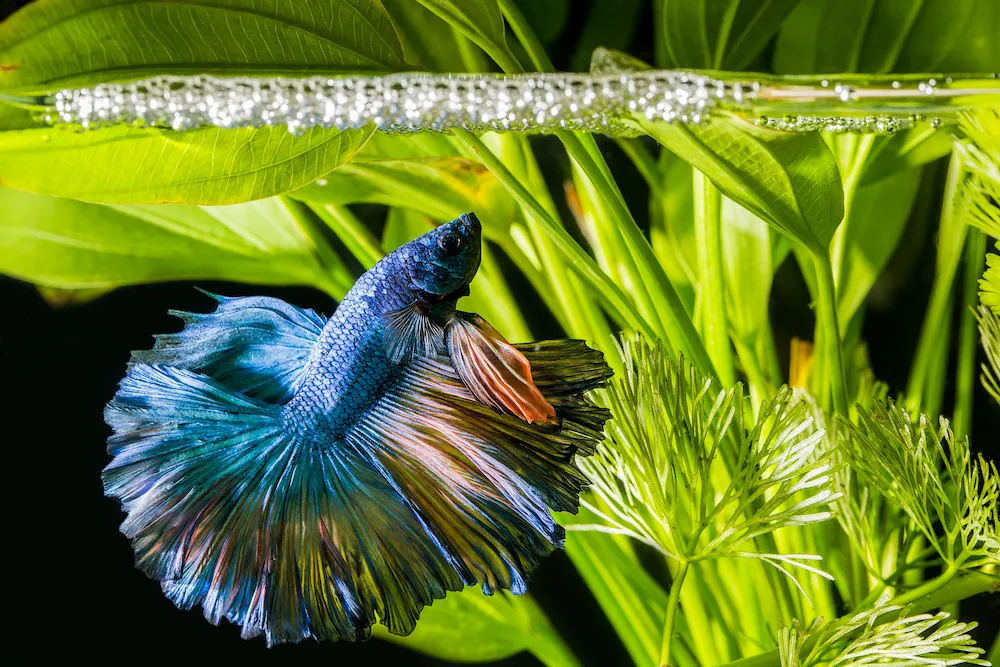
Sometimes you get the best sign of all: a bubble nest. Males build these floating nests on a still surface. In the wild, they anchor them in plants, and the nests are so delicate that researchers say calm water is needed for breeding.⁸ Keepers have seen nest-building as a sign of a comfortable betta for almost a century.⁴
If you see a nest the week after you baffle the filter, you can take it as a good sign. (If you don’t see a nest, don’t worry, as not every male builds them.)
Will Slowing the Filter Cause Water Quality Problems?
In short, slowing the filter usually doesn’t cause problems, but turning it off completely can.
Filtration: Mostly Unaffected
An outflow baffle doesn’t reduce filtration. The pump still moves the same water through the filter media; you’re just slowing the current after the water is already clean. Intake-side fixes do reduce how much water the filter handles, so those need regular cleaning.
Test the water after you adjust the flow. If ammonia or nitrite is above zero on a liquid test kit, do a water change and rinse the sponge.
Oxygen: Fine, With Two Conditions
Less surface movement means less gas exchange, which is usually a problem for most fish. Bettas are a bit different, since their labyrinth organ lets them breathe air. The research says low oxygen might be less of a problem for bettas than for other fish.⁴
But that doesn’t mean you can ignore oxygen. Low oxygen still stresses fish and makes them more likely to get sick,¹⁰ so:
- Keep part of the surface open. The labyrinth only works if the fish can reach air.
- Thin out floating plants as they spread. Dense surface cover can block oxygen exchange at the water’s surface.¹⁰
Still Water: The Real Risk
The answer to too much flow isn’t zero flow. A tank with no water movement builds up a protein film, collects debris in dead spots, and relies completely on you for cleaning.
The trap is that a betta will tolerate this for a long time. Bettas survive ammonia levels that would kill most freshwater fish many times over; the one lethal-dose study on the species found them roughly four to a hundred times more tolerant than typical aquarium fish.¹¹ So an unfiltered tank won’t kill a betta this week, or next, but that’s exactly how neglect gets a foothold.
Keep the filter running gently and stay on top of water changes. The biological filter takes about 40 to 60 days to get established in a new tank,⁴ so a betta in a young tank is relying on you for clean water. If your tank is only a few weeks old, that’s not the end of the world. Your water changes will just need to do the biofilter’s job for now. The cycling guide below explains the rest.
Read More: How to Cycle Your Betta Tank
Torn Fins: Damage or Disease?
Strong currents can damage fins in two ways: directly, by stressing the delicate tissue, or by pushing the fish into decorations. Either way, a tear is an injury, not an infection.
Fin tissue that’s torn by injury usually heals on its own in clean water, but bacteria can infect the tear and cause fin rot.¹² Fins have nerves and damage hurts,⁴ so it’s not just about looks. Fix the flow as soon as you see any damage.
After that, keep an eye on the edges of the tear. If it heals, the edges will stay smooth and stop getting worse once the problem is fixed. If the edges turn ragged, get darker, or keep shrinking over several days, it means bacteria have moved in and you’re dealing with fin rot.